Cookware manufacturing partner since 2002 info@cwchangwen.com · +86 180 2296 3948

Factory Direct or Flexible Sourcing? Cookware Manufacturer vs Trading Company

Quick answer: A cookware manufacturer is usually better when an importer needs deep engineering control, repeat volume, transparent production, and direct cost negotiation. A trading company can be better when an importer needs several product categories, lower combined quantities, supplier coordination, or a single export interface. The safest decision is not based on the supplier’s label; it is based on who controls the specification, production, quality evidence, delivery, and corrective action for the exact project.
Read time: 13 minutes.
The common advice to “always buy direct from the factory” is too simple for real cookware sourcing. A factory can provide process access yet still outsource critical work. A trading company can add margin yet reduce coordination cost across multiple specialized plants. Importers should compare the operating model, not assume that one business type is automatically cheaper or safer.
What is the practical difference between a cookware manufacturer and a trading company?
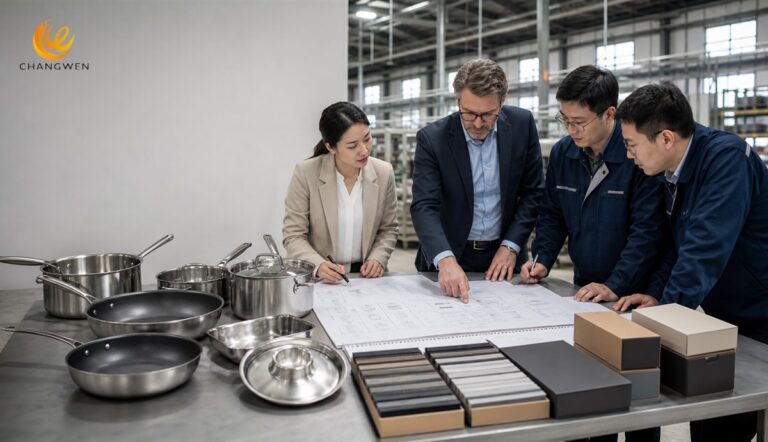
A cookware manufacturer owns or directly operates production processes that transform raw materials and components into finished products. Depending on the cookware category, those processes can include metal forming, casting, bonding, polishing, coating, welding, riveting, assembly, cleaning, inspection, and packing. A manufacturer may still buy components or subcontract specialized finishing, so factory status does not mean every operation occurs under one roof.
A trading company purchases products from one or more manufacturers and resells them to importers. A capable trading company may also manage product development, supplier selection, sampling, inspections, packaging, documentation, consolidation, and export logistics. A weak trading company may simply relay messages and add an undisclosed margin. The difference lies in control and service depth rather than the word “trading” on a license.
A supplier can also use a hybrid model. Some manufacturers operate an export company, some trading companies invest in factories, and some factory groups source categories they do not produce. Importers should therefore verify actual production locations and responsibilities instead of relying on a website description or email signature.
Which sourcing model is better at a glance?
| Decision area | Manufacturer direct | Trading company |
|---|---|---|
| Single-category technical depth | Often stronger when the factory specializes in the required process | Depends on the account team’s technical competence |
| Multi-category assortment | Limited to owned and closely related capabilities | Often easier through several coordinated factories |
| Price transparency | Potentially clearer, but not guaranteed | Includes service margin that should be evaluated against value |
| MOQ flexibility | Driven by production batch, tooling, materials, and packaging | May combine demand or negotiate across suppliers |
| Process access | Usually direct when the named site is the real factory | Requires permission and transparent factory disclosure |
| Project coordination | Strong for the factory’s own range | Can be stronger for complex assortments and consolidation |
| Quality accountability | Direct if responsibilities are documented | Useful only when the trader owns inspection and corrective action |
| Supply continuity | Depends on one production system | May offer alternatives, but substitutions must be controlled |
The table describes typical tendencies rather than universal rules. An experienced trading company can outperform a poorly managed factory, and a well-organized manufacturer can provide better export service than an intermediary. Importers should score evidence for the specific order.
When is buying directly from a cookware manufacturer better?
Direct manufacturing is usually advantageous when one product family represents substantial repeat volume. Stable demand justifies factory-specific tooling, material purchasing, process validation, and production planning. The importer can work directly with engineers and quality managers, which reduces message distortion when construction details are complex.
Direct access is especially valuable for technically sensitive cookware. Fully clad stainless steel, impact-bonded bases, pressure cookware, die-cast aluminum, hard-anodized surfaces, and controlled coating systems depend on precise process settings. A specialized factory can explain equipment limits, critical characteristics, tolerances, and failure modes more clearly than a general sales intermediary.
A direct relationship can also improve cost visibility. The importer can compare material weight, construction, cycle time, tooling, finish, packaging, and order volume with the quotation. Direct sourcing does not guarantee the lowest total cost, but it makes engineering-to-cost discussions easier when the factory shares the relevant assumptions.
Long-term programs benefit from direct change control. When the approved alloy, thickness, coating, handle, fastener, or packaging changes, the factory and importer can evaluate the effect without another communication layer. Direct access matters only when the manufacturer actually documents and reports changes; proximity does not replace control.
When can a trading company be the better choice?
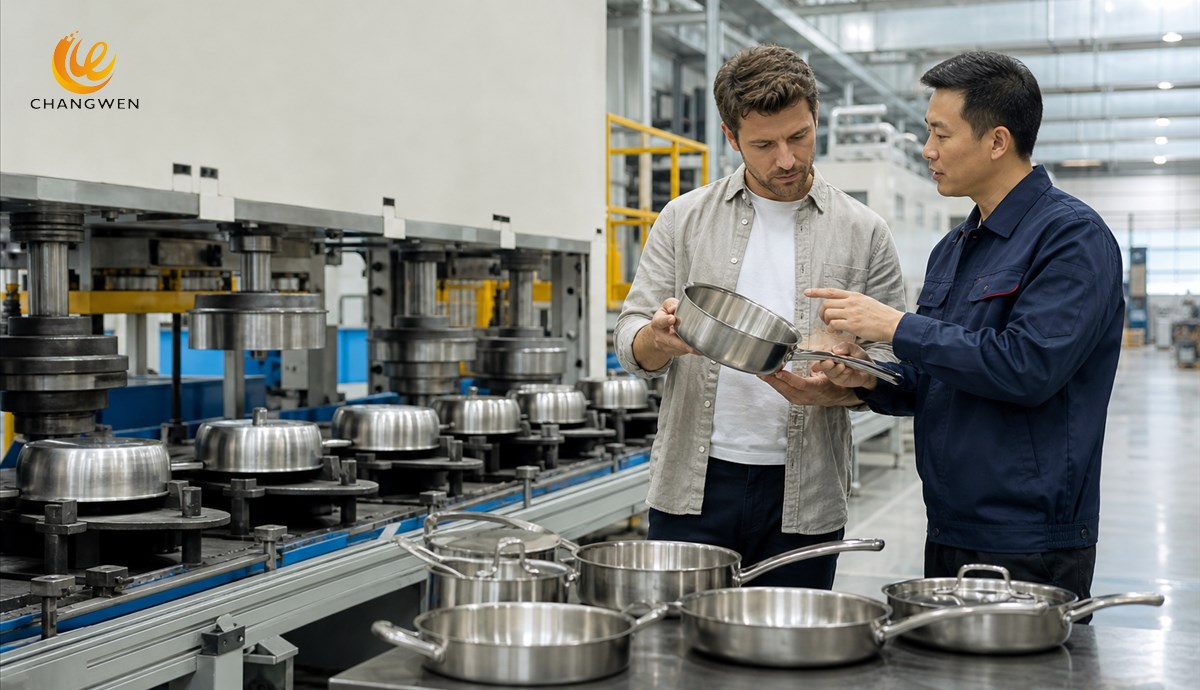
A trading company can be more efficient when the importer needs a broad kitchenware assortment that no single factory produces well. A launch might combine stainless steel pots, aluminum pans, carbon steel woks, utensils, glass lids, and packaging from specialized sources. One coordinator can align samples, artwork, inspection, documentation, container loading, and payment across the assortment.
A trading company can also help smaller buyers reach practical order quantities. Individual factories set minimums around production batches, components, finishes, and printed packaging. An intermediary may combine demand, use shared components, or consolidate smaller factory orders into one shipment. The importer should confirm that flexibility does not depend on mixing uncontrolled production or substituting suppliers.
New importers may benefit from export and project-management support. A capable trading company can translate commercial ideas into specifications, schedule approvals, arrange third-party testing, inspect production, coordinate freight, and prepare export documents. These services have a cost, but they can be cheaper than building an internal sourcing team for occasional orders.
A trading company can provide supply alternatives when one factory is unavailable. Alternative sourcing improves resilience only if the substitute product is revalidated. Moving an order to another plant without material, sample, test, and packaging approval creates hidden variation rather than genuine continuity.
Does buying factory-direct always produce a lower price?
Factory-direct purchasing removes one visible resale margin, but it does not automatically minimize total landed cost. The importer may need to pay separately for sourcing labor, factory audits, sample coordination, inspections, testing, consolidation, export handling, multiple bank charges, and higher freight caused by fragmented shipments. A trading company’s margin can be commercially rational when it replaces those costs.
Price comparisons must use the same product and service scope. A factory quotation may exclude packaging development, inspection, test coordination, consolidation, or after-sales handling that a trading company includes. Conversely, a trader may quote an opaque package that hides material or factory differences. Both offers should be normalized into product cost, service cost, logistics cost, risk allowance, and financing impact.
The lowest unit price can be more expensive when it causes larger minimums, excess inventory, delayed launches, quality claims, or emergency freight. Importers should compare total landed cost and expected failure cost. The site’s guide to the factors behind stainless steel cookware OEM pricing explains why products that look similar can have different cost structures.
Which model offers better quality control?
Quality depends on the control plan, not the supplier type. A manufacturer can control production directly but still release inconsistent goods if inspection limits are vague. A trading company can operate a strong quality team, but it cannot compensate for an undisclosed factory or a supplier that changes materials without approval.
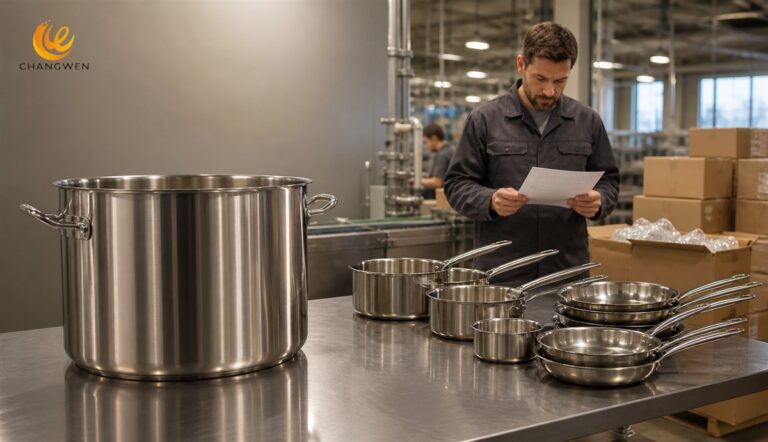
A direct factory should provide incoming-material checks, in-process controls, final inspection, calibrated equipment, lot traceability, nonconforming-product handling, and corrective-action records. A trading company should provide the same product-level evidence plus a clear explanation of how it qualifies factories, approves samples, schedules inspections, and prevents unauthorized sourcing changes.
Importers should define critical, major, and minor defects before production. Cookware controls may cover alloy identity, thickness, base flatness, bonding, coating thickness and cure, handle strength, lid fit, rim finish, induction response, appearance, labeling, and packaging. The bulk cookware purchasing checklist provides additional product and order controls.
How do MOQ and assortment complexity change the answer?
A manufacturer usually offers its best economics when the order fits normal production batches. Large repeat quantities of a focused range support material purchasing, line setup, automated processes, and stable packaging. Small quantities across many unrelated SKUs create frequent changeovers and component minimums, which can make factory-direct sourcing inefficient.
A trading company can coordinate mixed categories, but consolidation is not free. Different factories have different completion dates, carton dimensions, quality systems, and document readiness. The importer should ask who stores completed goods, who checks mixed loading, how delays are allocated, and whether one late supplier holds the entire shipment.
MOQ should be separated into product, component, color, finish, packaging, and total-order minimums. A small finished-goods MOQ may still require a large commitment to a custom handle or printed carton. Comparing the constraint behind each minimum reveals whether negotiation, shared parts, neutral packaging, or phased releases can reduce inventory exposure.

Who provides better product development and customization?
A manufacturer is often stronger when development requires process engineering, tooling, prototyping, and repeated technical changes. Engineers can connect a design request to forming limits, bonding behavior, coating cure, handle loads, and production yield. This direct feedback is valuable for original OEM products and performance-sensitive construction.
A trading company can be stronger when development requires assembling capabilities from several sources. The company may locate a body factory, lid supplier, handle producer, packaging printer, and testing provider, then coordinate the finished program. The importer should verify whether the trader owns a documented specification or merely forwards disconnected supplier files.
Customization should be controlled through drawings, bills of materials, approved samples, color standards, artwork, test requirements, and revision numbers. The custom cookware OEM solutions guide explains how product, branding, packaging, and production decisions interact during development.
Which model is safer for compliance and documentation?
The safer model is the one that connects every compliance document to the actual factory, material, construction, and production sample. A factory may provide direct traceability but lack export-document experience. A trading company may manage documents efficiently but create risk if reports come from a different producer or product.
Importers should verify business identity, production address, material declarations, food-contact reports, coating information, restricted-substance evidence, labeling, origin data, and applicable product-specific safety tests. Requirements vary by destination market and product, so qualified laboratories or local advisers should confirm the correct scope.
Documentation responsibility should be written into the purchase agreement. The supplier should notify the importer before changing factories, materials, subcontractors, processes, or components. A trading company must never treat a factory switch as an internal purchasing decision when the change affects approved evidence.
How should importers verify whether a supplier is a real manufacturer?
Importers should compare the legal entity, payment beneficiary, website, email domain, factory address, product scope, and export documents. Inconsistencies do not automatically prove deception because company groups can use separate export entities, but each relationship should be explained and documented.
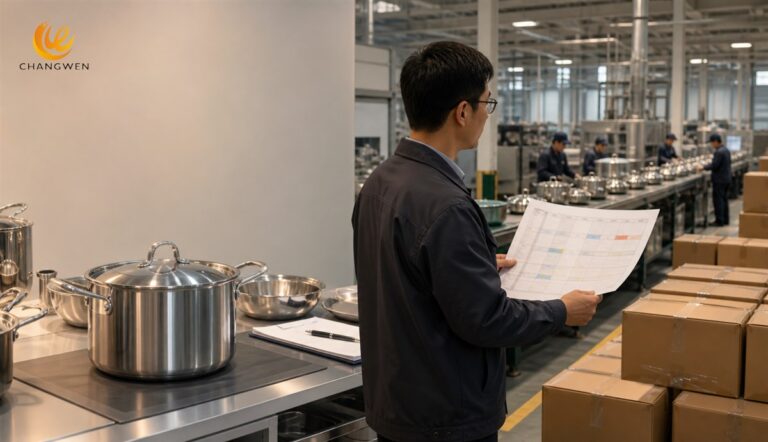
A factory audit should follow the actual product route from incoming material through forming, surface treatment, assembly, inspection, packing, and shipment release. The audit should identify owned processes, subcontracted processes, equipment, capacity bottlenecks, quality records, traceability, and nonconforming-product controls. A showroom tour is not enough.
Video calls can screen a supplier, but live views should include production flow, dated work orders, raw-material storage, inspection stations, and the offered product. High-risk or high-value orders benefit from an independent on-site audit. Importers should obtain consent and respect legitimate confidentiality while still verifying control.
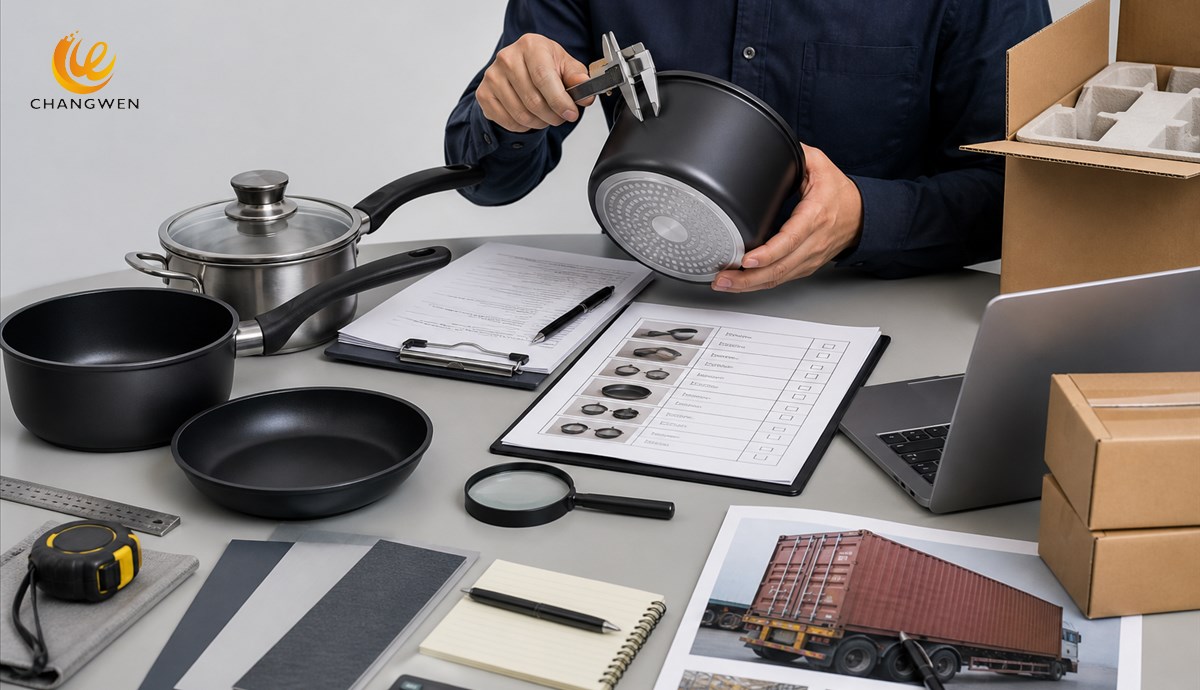
What questions should importers ask a trading company?
An importer should ask which factory will make each SKU, whether the factory can be audited, which processes are subcontracted, how suppliers are qualified, who owns the specification, who approves materials, and who authorizes shipment. A competent trading company should answer without treating factory identity as automatically confidential.
The importer should also ask how the service fee or margin relates to work performed. Useful services can include category sourcing, negotiation, sample management, factory audits, quality inspection, testing, packaging, consolidation, documentation, freight coordination, claims, and replacement handling. The importer needs service accountability even if the exact margin remains commercially private.
Corrective-action responsibility is especially important. The trading company should explain how it contains defective stock, investigates root cause with the factory, approves corrective action, verifies effectiveness, and compensates the importer when agreed requirements are not met.
What questions should importers ask a manufacturer?
An importer should ask which products and processes the factory genuinely specializes in, what is made in-house, what is outsourced, which materials are normally used, what the bottleneck capacity is, and how peak-season orders are scheduled. A large catalog should not be confused with deep capability.
The importer should request a product-specific control plan, sample process, traceability method, change-control rule, testing support, packaging capability, minimums, lead-time stages, and after-sales procedure. The Jiangmen cookware factory guide illustrates how a regional manufacturing ecosystem supports specialized OEM and ODM programs.
A manufacturer should also explain its export organization. Strong production does not guarantee accurate documents, responsive communication, artwork control, or shipment coordination. The importer should identify named owners for engineering, quality, sales, packaging, and escalation.
Can a hybrid sourcing strategy be better than choosing one model?
A hybrid strategy can use direct manufacturers for core, high-volume, technically sensitive cookware while using a trading company for accessories, low-volume extensions, or consolidated category launches. This structure preserves process access where it matters and reduces coordination burden where assortment breadth matters.
A hybrid strategy requires a common specification and quality language. Inspection levels, defect definitions, document templates, packaging rules, artwork control, and change approval should remain consistent across suppliers. Without common governance, the importer can create more complexity than either model alone.
Dual sourcing can improve continuity for critical SKUs, but alternative factories must be separately sampled, tested, audited, and approved. A backup source is useful only when it can reproduce the customer promise. Unvalidated substitution is not resilience.
How can an importer choose with a project-risk matrix?
Importers can score four project dimensions: technical complexity, assortment breadth, annual volume, and internal sourcing capability. High technical complexity and high repeat volume favor direct factory engagement. High assortment breadth and limited internal resources favor a capable trading company. Mixed projects may favor a hybrid structure.
| Project profile | Likely better starting model | Reason |
|---|---|---|
| One technical cookware line, high repeat volume | Manufacturer direct | Engineering access and stable production economics |
| Many unrelated kitchenware categories, moderate volume | Trading company | Supplier coordination and shipment consolidation |
| Small first order with limited sourcing staff | Qualified trading company | Project support may offset service margin |
| Custom product with proprietary tooling | Manufacturer direct | Clearer tooling, process, and change control |
| Core cookware plus low-volume accessories | Hybrid | Direct control for core items and coordination for extensions |
The matrix identifies a starting model, not a final supplier. The importer must still verify capability, quality, compliance, commercial terms, communication, and continuity. Business type narrows the search; evidence determines approval.
How should importers score the final candidates?
A supplier scorecard should measure the result the importer needs rather than reward a business label. A practical model can assign 20 percent to product and process capability, 20 percent to quality control, 15 percent to compliance and traceability, 15 percent to total landed cost, 10 percent to capacity and delivery, 10 percent to development and packaging support, and 10 percent to communication and corrective-action ownership. The weights should change when a project has unusual safety, launch, or inventory risk.
Every score should cite evidence. Capability can be supported by an audit, equipment list, process map, and comparable samples. Quality can be supported by a control plan, inspection records, traceability, and corrective actions. Commercial value can be supported by a normalized quotation that separates product, service, testing, packaging, logistics, and financing assumptions. A score without evidence is only an opinion expressed as a number.
Critical requirements should remain pass/fail gates. A candidate should not advance if it refuses factory disclosure required by the project, cannot verify food-contact materials, prevents reasonable inspection, or lacks control of safety-critical assembly. High scores in price, speed, or friendliness should never compensate for a critical conformity gap.
The scorecard should also record residual risks and owners. A factory may score well but need better export documentation; a trading company may coordinate well but need clearer change notification. A time-bound corrective plan can resolve manageable gaps before the purchase order. Unresolved risks should be priced, limited through a pilot order, or treated as disqualifying when the potential impact is severe.
Frequently asked questions
Is a cookware manufacturer always cheaper than a trading company?
No. A manufacturer may offer a lower product price, while a trading company may reduce coordination, consolidation, inspection, and logistics costs. Importers should compare like-for-like total landed cost and risk.
Can a trading company provide reliable quality control?
Yes, when the trading company discloses factories, controls specifications, uses qualified inspectors, records results, prevents substitutions, and owns corrective action. A trader that only forwards messages provides little quality protection.
Why do manufacturers use separate export companies?
Some manufacturing groups separate production and international sales for licensing, tax, finance, staffing, or operational reasons. The structure can be legitimate if ownership, payment, production, warranty, and document responsibilities are transparent.
Should first-time importers buy factory-direct?
First-time importers can buy direct when they have clear specifications and resources for audits, testing, inspection, logistics, and claims. Importers without those capabilities may gain more value from a qualified sourcing partner.
What is the biggest risk of using a trading company?
The biggest risk is loss of visibility when the trader hides or changes the factory, material, or process. Written factory disclosure, change approval, sample control, inspection rights, and traceability reduce that risk.
Final verdict: manufacturer or trading company?
A cookware manufacturer is usually the better choice for focused, technically demanding, repeat-volume programs that justify direct engineering and production control. A trading company can be the better choice for broad assortments, smaller combined quantities, consolidation, and importers that need an external sourcing team. A hybrid approach can serve projects that contain both needs.
The importer should select the party that provides the strongest verified control per total landed cost. Factory ownership is valuable, but it is not a substitute for specifications, quality systems, compliance evidence, transparent commercial terms, and accountable corrective action. The best sourcing model is the one that makes responsibility visible from sample approval through repeat shipment.