Cookware manufacturing partner since 2002 info@cwchangwen.com · +86 180 2296 3948

The Complete Frying Pan Buying Guide 2027

Estimated reading time: 13 minutes
The best frying pan for your kitchen is the one that fits your burner, gives your usual meal enough flat cooking space, and has a surface you will maintain. Choose uncoated stainless steel for browning and pan sauces, coated nonstick for easy release at moderate heat, or seasoned iron or carbon steel when heat retention or a renewable cooking surface matters more than easy cleanup. Before buying, confirm the actual base diameter, empty weight, model-specific heat limits, and care instructions.
This frying pan buying guide gives home cooks and retail buyers a way to compare two plausible pans using the same recipe, cooktop, and handling checks. The 2027 edition treats marketing claims as questions to verify on the exact model. A useful shortlist starts with what you cook on an ordinary weeknight and ends with evidence that the pan can do it comfortably.
Which frying pan should you buy first?
A medium uncoated stainless steel frying pan is a practical first purchase for a cook who regularly browns chicken, chops, or vegetables and turns the browned residue into sauce. Stainless steel supports that sequence because the cooking surface can develop fond, the browned bits that dissolve when liquid is added. A coated pan makes more sense as the first purchase when the most common meals are eggs, pancakes, and delicate fish and easier release is the deciding factor.
A one-pan kitchen benefits most from a model that handles its most common meal with little friction. A cook who makes eggs every morning and browns meat once a month should give release and cleanup more weight than searing. A cook who frequently browns batches and makes sauces should give the ability to scrape up fond, manage heat, and clean the uncoated surface more weight than how easily a dry egg slides.
| Priority | Start with | Check before buying |
|---|---|---|
| Brown food and make a pan sauce | Uncoated stainless steel | Flat cooking area and how the pan responds when you lower the burner |
| Release eggs, pancakes, and delicate fish | Coated nonstick | Exact coating type, preheating limits, utensils, and cleaning instructions |
| Hold heat through a batch | Cast iron or a heavier uncoated pan | Loaded weight, burner fit, and whether an assist handle is useful |
| Toss food and maintain a seasoned surface | Carbon steel | Handle comfort, weight at the selected size, and seasoning instructions |
A two-pan setup earns its storage space when the second pan solves a recurring problem with the first. Pair a stainless workhorse with a small coated pan for breakfast, or pair an everyday skillet with a larger pan for family batches. Two models with different nominal sizes can still have similar usable floors, so compare the measurements before paying for a second pan.
What dimensions tell you how much food a frying pan holds?
The flat interior diameter tells you how much food can sit in direct contact with a frying pan. The rim diameter describes the width across the opening, and the exterior base diameter describes the underside that meets the cooking surface. A heavily flared 28 cm frying pan can have less room for browning than a straighter pan with the same rim diameter. Ask for all three measurements when the listing provides only a size name.
Two circular frying pans with flat interiors of 20 cm and 23 cm offer about 314 and 415 square centimeters of flat area respectively. The 3 cm change produces about 32 percent more flat area because area increases with the square of the radius. Real space for food will vary with the shape of each piece and the gaps between them. Use the estimate to compare pans, then lay out an example portion to check the fit.
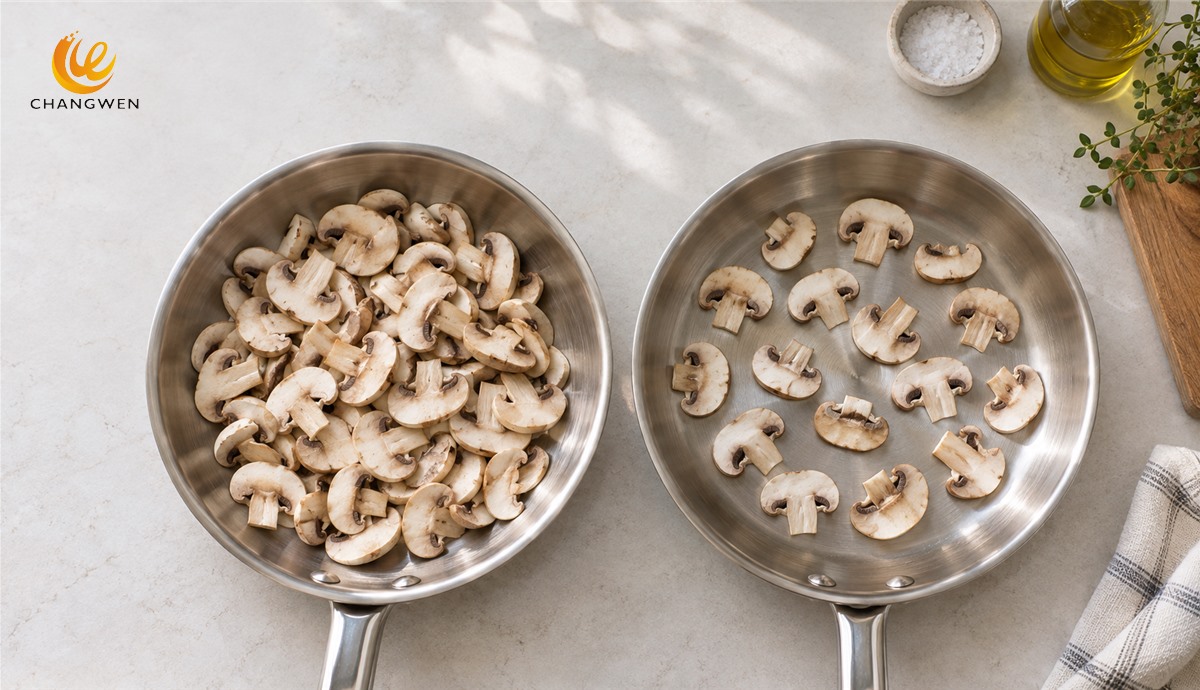
To size a frying pan for mushrooms, cut vegetables, or protein, arrange a normal batch in a single layer on a plate and measure the patch it occupies. Leave room for a spatula and enough spacing for moisture to escape. A pan that crams in an entire batch may brown less effectively than one that cooks the food in two smaller batches. Changwen’s guide to choosing frying pan size offers more detail on matching dimensions to cooking habits.
Sidewall shape changes the way a frying pan handles food. Sloping walls make it easier to get a thin spatula under a pancake or tip food onto a plate. Taller, straighter walls contain splashes and leave more headroom for shallow sauces, though some utensils need a steeper entry angle. If your main meal starts with browning and ends with simmering, compare a deeper frying pan or saute pan on liquid capacity, utensil access, and lid fit.
How do you match a frying pan to gas, electric, or induction?
For induction, check the exact frying pan’s compatibility label and compare its magnetic base diameter with the cooktop manual’s minimum for the zone you plan to use. A magnet that sticks firmly to the underside is a useful preliminary check. A compatible pan can still go undetected on a zone that requires a larger base, and a burner that recognizes a wide frying pan can still concentrate most heating near its center. Test the pan on the intended zone when you have a sample.
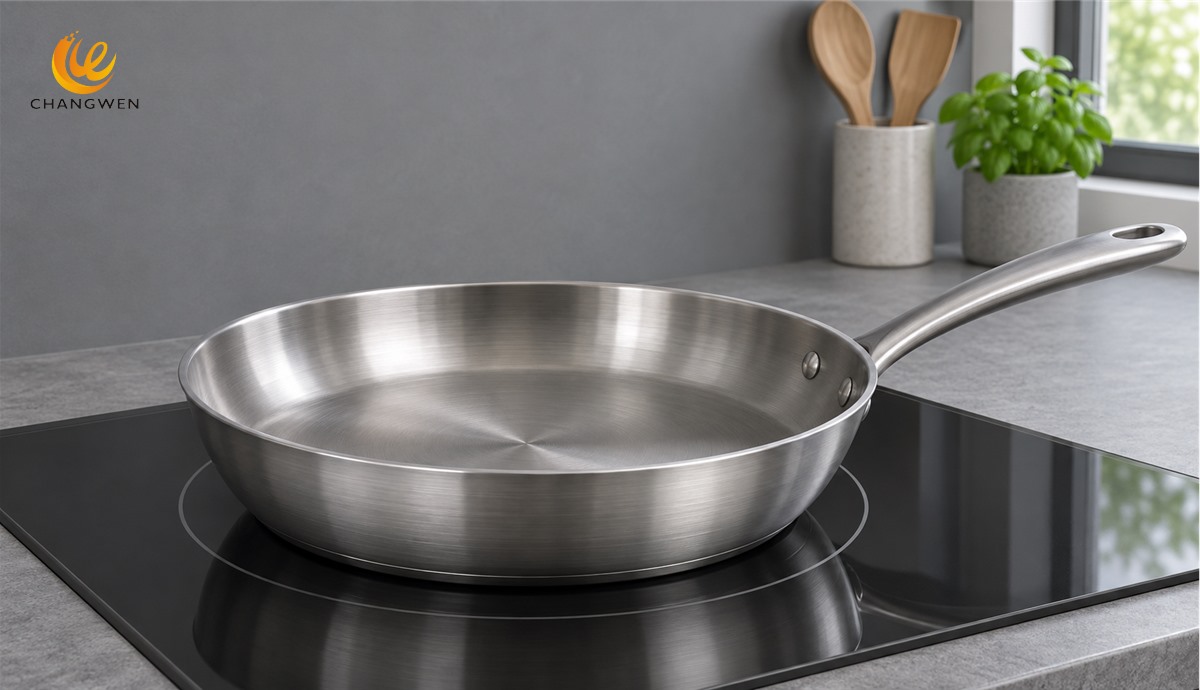
On flat electric cooktops, a stable base and a suitable fit to the heating zone help the frying pan heat consistently. Check that the cold pan sits without pronounced rocking and inspect the cooktop manual for restrictions on heavy or rough-bottom cookware. On gas, choose a burner that keeps the flame under the base, where heat is needed. A flame climbing the sides can heat the handle and the walls while making the cooking floor harder to control.
An induction compatibility claim is more informative when it names the base dimensions and the conditions used to verify detection. For retail buyers, a pan that works on a large showroom zone may still generate returns when a shopper tries it on a small portable unit. Use the minimum vessel dimensions from representative appliances as the test conditions, and state the pan’s measured magnetic base size on the listing. Where cooktop models differ, direct customers to the requirements in their own manuals.
What does frying pan construction change in daily cooking?
Uncoated stainless steel offers a durable cooking surface for browning, scraping fond, and making acidic pan sauces. A conductive aluminum core or base can help spread heat across the steel cooking surface. A useful stainless frying pan comparison identifies the position of the conductive layer, the pan’s weight, and the cooking response on your burner. The number of layers alone gives you little information about thickness or heat distribution.
A fully clad stainless frying pan carries its bonded layers up the sidewalls, while a disc-base design concentrates its conductive structure under the bottom. A clad body can benefit dishes that use the walls as well as the floor, such as a sauce stirred around the pan. A well-matched disc-base pan can serve floor-focused tasks such as browning patties at a lower purchase price. Judge each sample by where it browns, how long the heat lingers after adjustment, and how comfortable it is to lift.
Coated aluminum frying pans often appeal to cooks who want easy release and manageable weight. The coating system and its care instructions determine how the food-contact surface should be used. Induction compatibility depends on whether the model has a suitable magnetic structure. A buyer comparing two coated pans should read the exact temperature and utensil limits, confirm the allowed cleaning method, and compare how each releases the food that will be cooked most often.
Cast iron usually brings more mass to a frying pan of comparable size. A substantial preheated pan can hold heat well when food is added, which helps with tasks such as browning chops. That same mass makes the pan slower to cool and harder to lift when full. Choose a size you can move confidently with oven mitts and check that any seasoning and drying routine fits your kitchen habits.
Carbon steel suits cooks who want a seasoned skillet that is often easier to maneuver than a similarly sized heavy cast-iron model. Thickness varies, so compare actual weights and check the manufacturer’s instructions for heat changes and cleaning. A regularly maintained seasoned surface can work well for high-heat frying. If long acidic simmering or hands-off washing is a frequent part of your routine, stainless steel may demand less ongoing attention.
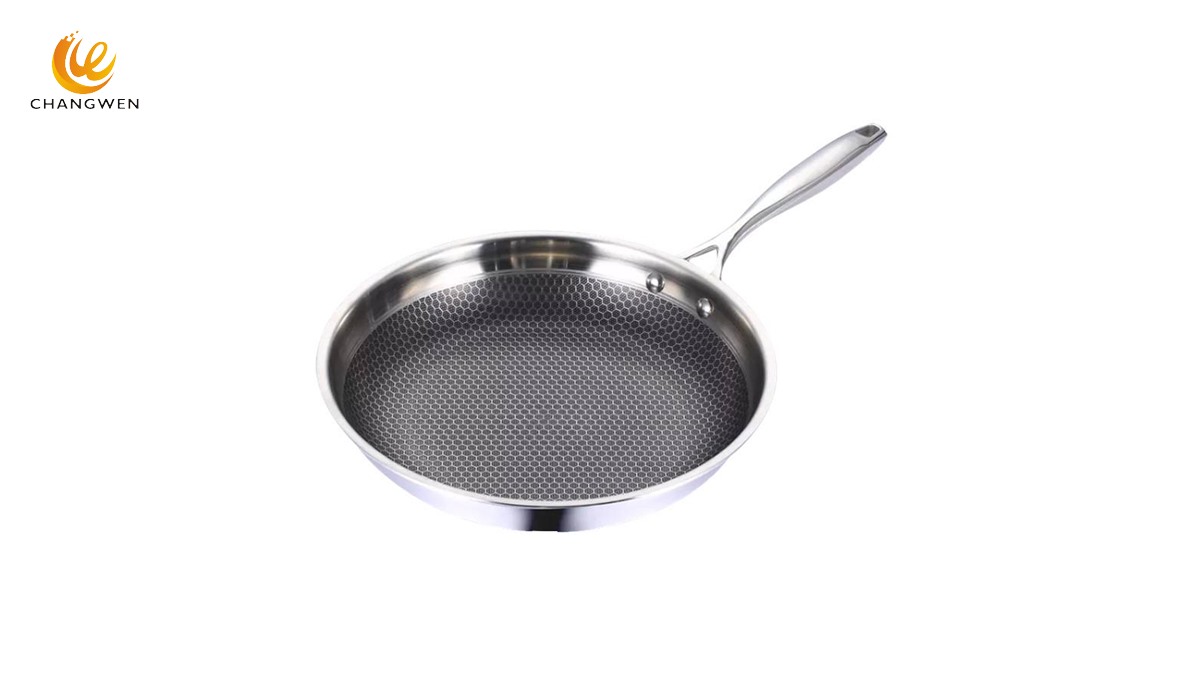
A patterned hybrid frying pan uses raised metal and a cooking surface that may include a coating between the raised areas. Shoppers should confirm the exact coating and follow its care rules. A pattern can change how a spatula, food, or sponge contacts the surface, so compare release and cleanup using the same food and utensils you would use with a smooth coated pan. Ask for a model-specific manual before treating the visual design as a performance claim.
What should you check when you pick up a frying pan?
A frying pan handle should feel secure and controllable with the pan loaded. If a sample is available, simulate a typical meal with a cool load and check the wrist angle for lifting and pouring. A longer handle can aid leverage and keep the hand farther from the burner. A shorter handle can fit better in a tight cabinet or oven. An assist handle matters most when the pan is wide, heavy, or frequently carried with liquid inside.
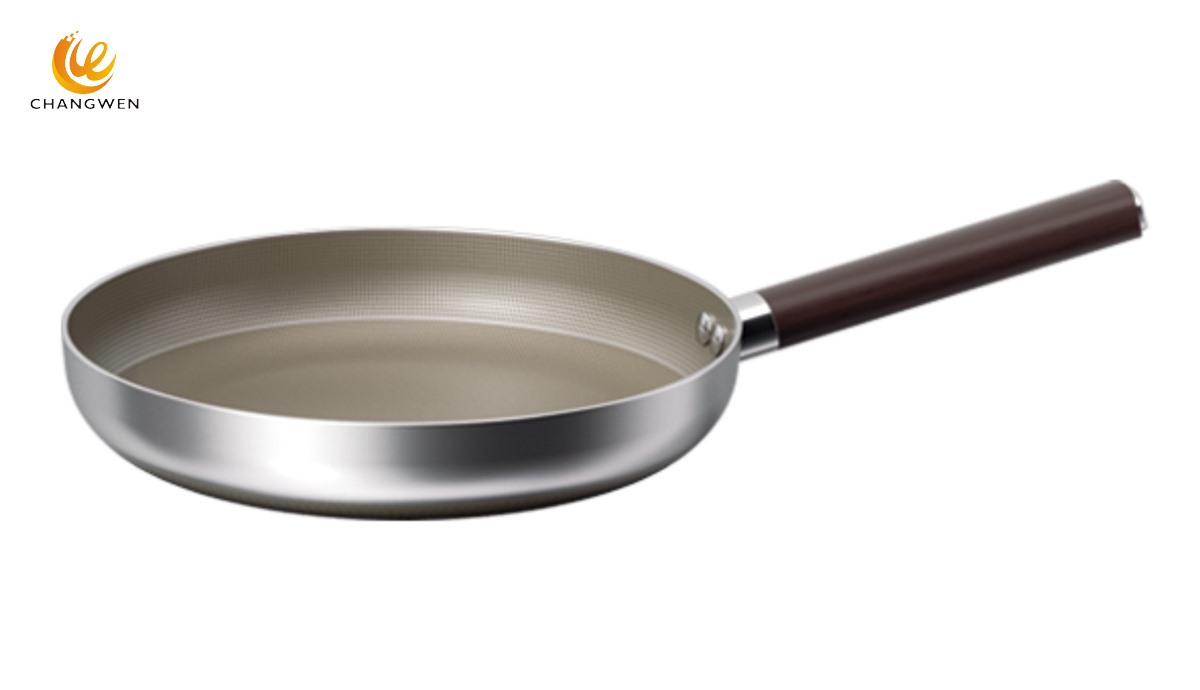
Riveted and welded frying pan handles should be judged on the joint’s execution, the grip, and accessibility for cleaning. Rivet heads inside the pan can create areas that need extra attention when washing. A flush interior may simplify cleaning, while the handle joint still needs to feel stable and pass the applicable quality checks. Ask for care instructions and, for a commercial order, agree on the inspection criteria for the attachment before approving the sample.
A frying pan lid is worth buying when the intended recipes require covered cooking, such as finishing a thick piece of food gently or controlling splatter while simmering. Check the exact lid model and how it seats on the rim. The pan body, handle, and lid can have different oven limits, so use the lowest applicable limit when they go into the oven together. Make sure a lid or helper grip can be handled safely with your oven mitts.
Measure a frying pan’s total footprint before buying for a compact kitchen. Record its handle-to-rim length, height with any lid fitted, and the space beside the burner when another pan is in use. A pan that fits across the hob can still block adjacent cookware or exceed the length of a drawer. Compare a smaller pan with a shorter-handled alternative using the actual storage opening and oven space.
How do you compare two frying pans fairly?
A useful frying pan comparison starts cold and uses the same cooktop zone, ingredient weight, cut size, and oil for both samples when both sets of instructions allow those conditions. Let the pan and hob return to comparable starting conditions between trials. Measure what matters to the recipe, such as where browning first appears or whether a fish fillet lifts intact. Repeat an unexpected result before interpreting it as a difference between the pans.
For a browning trial, arrange equal slices of mushroom across the middle and outer part of each usable cooking floor and observe the color at a fixed interval. A sharply darker center may indicate a mismatch between burner coverage and pan geometry in that kitchen. After adding a fresh batch, notice whether the pan returns to a productive sizzle and how far you can lower the heat without stalling cooking. Treat the result as evidence for that pan and burner combination.
For a release trial, use the same food, oil amount, and approved spatula and track how readily the food lifts after normal cooking. An omelet or delicate fillet gives more useful information than an empty display demonstration when ease of release is the purchase priority. Let each pan cool as directed, then record whether cleanup requires a rinse, a soak, or extra scrubbing around the handle attachment.
A heat retention trial is only helpful when it reflects the meals you make. For sequential batches of vegetables, record how quickly each pan resumes browning after food is added and how easy it is to avoid scorching when the batch gets smaller. A heavy pan can help preserve momentum between batches, while a more responsive one may give finer control when switching from searing to a quick sauce. Give greater weight to the change that occurs most frequently in your kitchen.
A sample worksheet makes frying pan comparisons easier to share. Record the exact model, rim and floor diameters, magnetic base diameter if applicable, weight, cooktop zone, recipe, release result, and cleanup time. Note which observations were repeated and which came from a single trial. If two pans meet the cooking requirement, use a second decision criterion such as storage fit, loaded handling, or purchase cost to make the choice.
Which frying pan has the better value over time?
Compare frying pan value by considering the purchase price alongside how frequently the pan will be used, how much care it needs, and what would cause replacement. A pan used every morning can justify a higher price if it releases food reliably and reduces cleanup. A heavy specialty skillet that is awkward to store may see little use even if its material lasts for years. The better value is the pan whose benefits you are likely to use regularly.
Care limits are part of the buying decision. A coated frying pan needs a cooking routine that respects its temperature, utensil, and washing instructions. Seasoned iron or steel is a better fit when the cook is willing to keep the pan dry and maintain the surface as directed. Stainless steel may require more attention to heat and oil for delicate foods, though its uncoated surface suits cooks who want to deglaze and remove cooked-on residue according to the manufacturer’s instructions.
Warranty language is worth comparing before you infer a pan’s service life from its price. Check who handles a claim, what counts as a defect, how coating wear is treated, and whether replacement lids or handles are available for the model. If two pans cook equally well, clearer care instructions and easier access to appropriate replacement parts can make one a better long-term purchase.
What should wholesale and private-label buyers ask a supplier to confirm?
A frying pan assortment starts with distinct cooking jobs and price points. For example, a brand might offer a medium uncoated stainless skillet for browning, a smaller coated model for breakfast, and a larger model for batch meals. Measure the usable cooking floors so shoppers can see why each SKU exists. The cookware set buying guide for retail markets explains how to apply the same reasoning to bundled assortments.
A frying pan sample approval sheet should name dimensions, weight range, construction, coating if applicable, handle style, surface finish, cooktop compatibility, and the permitted product claims. Attach the packaging artwork and care instructions to the same approval record. An approved sample gives quality teams a concrete reference. Written tolerances and test conditions give them a way to resolve a disagreement when production units differ from the sample.
Compare wholesale quotes using the landed cost and the same specification. Confirm what the supplier includes for packaging, artwork, tooling, inspection, freight, and any destination charges you need to estimate separately. Ask which minimum order quantity applies to the body size, handle option, or packaging variant. A low quoted price can lose its advantage if a custom box raises the minimum or a wider carton changes freight costs.
Keep descriptions consistent across the frying pan, its retail carton, and the online listing. For induction, verify the exact base and publish model-specific information. For coatings or oven use, use the instructions and evidence for the actual components. For a private-label program, agree on who updates the artwork and listings if a handle, lid, or surface changes. Consistent claims make it easier for buyers to choose correctly and for your service team to answer questions after purchase.
For a first order, decide which observations will trigger a revision before the supplier starts production. A handle that feels awkward to two reviewers might justify a second sample with a different grip angle. A pan that fails to register on a required induction zone calls for a base change or a narrower compatibility claim. Document the decision together with the sample number so a revised drawing and a revised quotation can be checked against the same request.
For a replenishment order, compare a current production sample with the original approval record and the listing customers actually saw. If the packaging has changed, verify carton dimensions and care instructions along with the pan itself. If the body or handle changes, repeat the relevant cooking or handling checks before approving the update. A repeat purchase saves time when the approved specification still describes the unit being shipped.
Request a wholesale frying pan quote or start a private-label project
Changwen supplies wholesale cookware and offers private-label and OEM/ODM manufacturing for retailers, distributors, and cookware brands. Browse the Changwen stainless steel frying pan collection for existing models or review the custom cookware manufacturing options for choices around materials, sizes, finishes, handles, branding, and packaging. Existing designs can give you a starting point for wholesale sourcing, while a custom brief is useful when your channel requires a distinctive specification.
Contact Changwen for a wholesale quote or OEM sample discussion. Include your destination market, target retail price, order quantity by size, intended cooktops, preferred surface and construction, and any logo or packaging requirements. If you already have a reference pan, share its flat cooking diameter and weight. Those details help the team discuss comparable options and confirm model-specific quantities, sample costs, lead times, and pricing for your project.