Cookware manufacturing partner since 2002 info@cwchangwen.com · +86 180 2296 3948

Cookware Set Buying Guide: How to Choose the Right Cookware Set for Your Market

Estimated reading time: 13 minutes.
A cookware set is right for a market when its vessels, materials, cooktop compatibility, price position, packaging, and documentation match the people and sales channel that will actually use and buy it. For an importer or private-label brand, the first decision is therefore the target customer, not the number of pieces printed on the box. A compact urban range, a family cooking range, and a premium gift range can all be successful, but each needs a different product brief and a different proof of value.
This cookware set buying guide gives wholesale buyers a practical way to turn a market opportunity into a testable set specification. It focuses on assortment design and purchase decisions rather than repeating our separate explanations of what cookware piece count means or who should buy 3-piece, 5-piece, or 7-piece sets. The goal is a range that customers can understand, retailers can present, and a factory can reproduce consistently.
What does "the right cookware set for your market" mean?
The right cookware set solves recurring cooking jobs at a price the intended customer will accept, while fitting the local kitchen, retail channel, and buyer's operating constraints. A set that performs well in a showroom can still be wrong for a market if its largest pot will not fit common cabinets, its base does not work on local cooktops, or its packed carton is too costly for the intended e-commerce channel.
A practical buying sequence is: define the customer and channel; map common meals and cooktops; choose the active vessels; select material and construction; approve handles, lids, and finishes; calculate the complete landed offer; verify market requirements; then test a production-representative sample. Each decision limits the next. A buyer who starts with a large advertised piece count often discovers too late that the set includes the wrong vessel mix or exceeds the target retail price.
Start with a market brief, not a catalog photograph
A market brief should describe the customer in observable terms: cooking frequency, typical dishes, household size, available storage, cooktop type, care preferences, price expectations, and purchase channel. "Premium consumers" is too vague to guide a factory. "Induction-owning households that cook for two to four people, value dishwasher-friendly stainless steel, and buy from a mid-price department store" gives the product team a usable starting point.
The retail channel changes the product brief even when the cooking jobs are identical. A supermarket may need one box that explains the contents and benefits from several feet away. A marketplace listing needs component photographs, exact dimensions, unambiguous compatibility claims, and shipping protection. A specialty store can support a more detailed demonstration of construction and finish. A hospitality buyer may place greater weight on replacement parts, repeated washing, and standardized capacities than on a giftable color box.
| Possible market position | Main customer job | Likely design priority | What the buyer should validate |
|---|---|---|---|
| Compact starter range | Cover everyday meals with limited storage | Few versatile vessels, nesting, clear value | Actual vessel count, cabinet fit, useful capacities |
| Family everyday range | Prepare several dishes at the same time | Distinct pan roles, larger working capacity, lid fit | Burner fit, weight, simultaneous cooking workflow |
| Premium or gift range | Combine performance with an attractive presentation | Finish consistency, construction story, packaging | Visible quality, handling, delivery protection |
| Professional or institutional range | Support repeated service and cleaning | Durability, standard sizes, replacement planning | Handling tests, cleaning process, spare components |
Choose vessels by cooking function before deciding the piece count
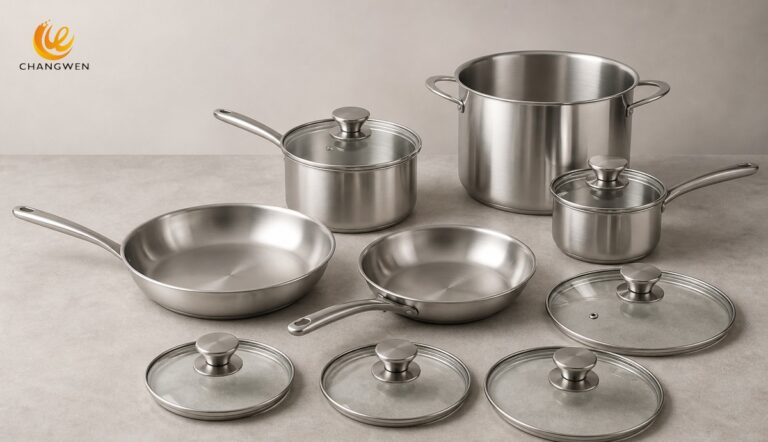
Active vessels are the pots and pans that directly hold food during cooking. A useful core may include a frying pan for browning, a saucepan for controlled liquid cooking, and a deeper pot for boiling or batch meals. A saute pan, second frying pan, wok, or steamer earns its place when it adds a cooking function the target customer regularly uses. Duplicate shapes that differ only slightly in capacity can increase cost without adding a clear benefit.
Piece count is a package inventory measure, not a measure of cooking capacity. Lids, inserts, tools, removable handles, and protectors may all contribute to the number on a box. A buyer comparing two offers should list active vessels, lids, and accessories separately, then check whether each included item has a reason to exist. Our piece-count guide explains the counting rules in more detail; this market guide uses the count only after the cooking jobs are defined.
Capacity should be specified as usable volume and physical dimensions rather than a loose label such as "large saucepan." A pot with a nominal brim capacity may have substantially less practical working volume when food needs headspace. Diameter, depth, base diameter, handle span, lid relationship, and filled weight all affect the real fit of a set. For a large pot, a buyer can use the site's stockpot capacity guide to distinguish stated capacity from a workable serving quantity.
Match materials and construction to the market promise
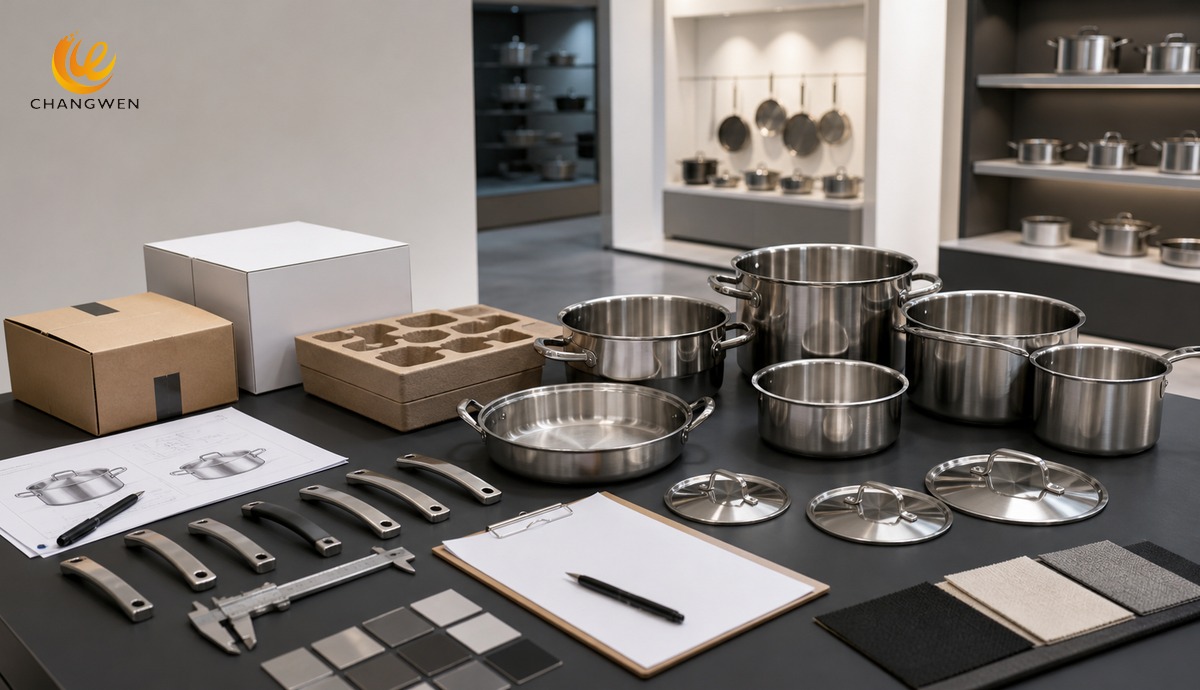
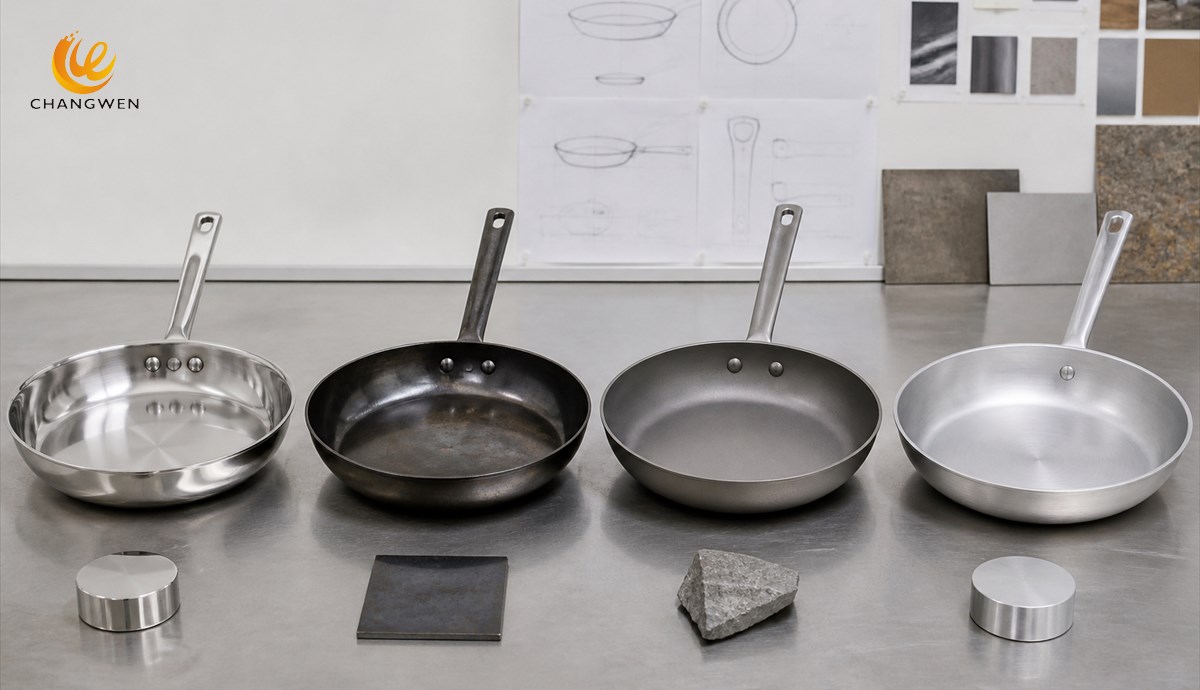
Material selection should follow the benefit the buyer intends to sell and the care the customer will accept. Stainless steel supports a durable, uncoated everyday story but requires suitable construction and cooking technique for controlled heat. Aluminum responds quickly to heat and can support a lighter coated range, while the coating system and care instructions become central to the product promise. Cast iron and carbon steel can serve specific cooking preferences, yet weight, seasoning, storage, and care may make them less suitable for a broad starter set.
Stainless steel grade alone does not describe pan performance. The food-contact surface, heat-spreading layer, magnetic exterior, body thickness, and base geometry work together. A disc-base stainless pan concentrates the conductive layer under the base, while a fully clad construction extends the layered structure through the walls. The better choice depends on cooking tasks, target price, weight, and tested heating behavior. Buyers comparing a premium range can use Changwen's tri-ply OEM guide to frame the construction questions.
A material claim should be tied to a named component. "Stainless steel set" does not say whether the food-contact surface, outer layer, handle, or lid rim uses that steel. A specification should state the declared grade and thickness for each relevant part and describe any aluminum core or bonded base separately. A mill certificate can support an alloy claim, but the buyer should connect that document to the actual production batch and use appropriate testing when the claim or market requires it.
Check cooktop, oven, handle, and lid compatibility as one system
Induction compatibility needs more than a magnetic label. A buyer should confirm that every intended cooktop vessel has a suitable magnetic base, an appropriate contact area, and stable behavior on representative induction zones. A small pan may not activate every hob, and a large pan may heat unevenly on a small zone. A magnet check is a useful initial screen, but a cooking test on the target appliance provides more meaningful evidence.
Oven claims must account for the complete assembly. A metal body may tolerate a temperature that a silicone grip, coating, glass lid, or knob cannot. The lower-rated component sets the use limit for that configuration. A buyer should obtain a written oven-use specification for each vessel and lid combination, then check that the packaging and product page state the same limit without implying that an untested component is safe at a higher temperature.
Handle design affects perceived quality and everyday safety. Buyers should evaluate grip clearance, balance when empty and filled, attachment strength, heat exposure, and ease of cleaning. A heavy stockpot needs a different handling assessment from a light frying pan. A welded handle can be suitable when correctly engineered and tested; a riveted handle offers a different service and cleaning tradeoff. The choice should follow measured requirements rather than a universal ranking of attachment methods.
Build a price ladder from landed value, not factory price alone
A cookware set price should be evaluated against the complete offer delivered to the buyer's warehouse or retail channel. Factory unit price is only one component. Packaging, inserts, tooling, testing, inspection, inland transport, freight, duties, damage allowance, returns, and replacement parts can change the true cost. A cheaper set with a large carton or poor delivery protection may cost more per sellable unit than a better-specified alternative.
A useful internal calculation is: expected landed cost per sellable set = total product, packaging, tooling allocation, logistics, duties, testing, and expected damage costs divided by sellable sets received. This is a planning formula, not a universal accounting standard. The buyer should use the destination market's real freight, tax, channel fees, and expected loss data before deciding whether a set supports the intended retail price and margin.
Retail price comparison should use like-for-like contents. Two boxes can display the same piece count while carrying different numbers of active vessels, different body thicknesses, and different packaging quality. Comparing only box price or declared piece count can push a buyer toward a false bargain. Changwen's OEM price-factor guide gives more detail on how materials, construction, customization, quantity, and packaging affect a quotation.
Design packaging for the channel and the promise
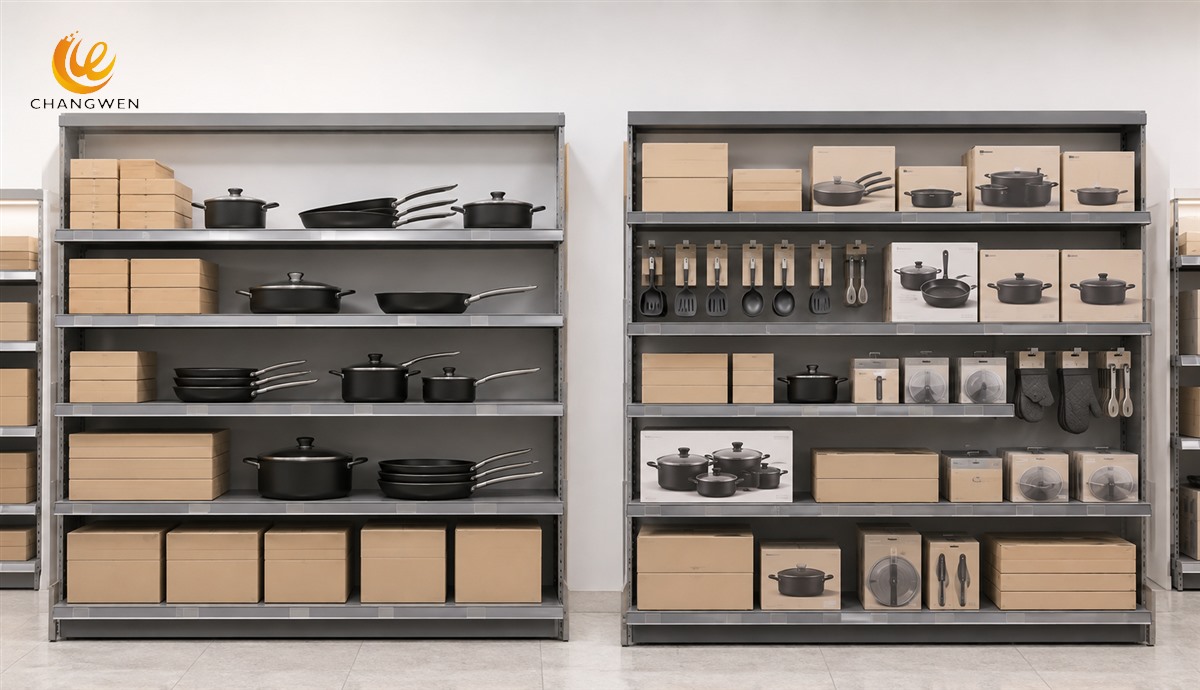
Packaging has to identify the product, protect it in transit, and fit the channel's handling pattern. A shelf box should make the set contents, dimensions, cooktop compatibility, care limits, and key benefit easy to verify. An e-commerce carton needs protection against the delivery route actually used, with a clear plan for glass lids and exposed handles. A bulk hospitality carton may prioritize efficient handling, identification, and low damage over consumer-facing graphics.
Packaging design should begin before final sample approval because carton dimensions, nesting, inserts, and presentation influence the set itself. A long handle may improve grip but raise parcel size. A glass lid may improve consumer confidence but need more cushioning. A color box may strengthen shelf recognition but increase printing minimums. The site's cookware packaging guide explores these channel choices in detail.
Verify destination-market requirements before approving the set
Food-contact requirements vary with the destination, product materials, coatings, and intended use. A buyer should identify which components touch food, which jurisdictions apply, which claims will appear on packaging, and what declarations or test reports the importer needs. A single logo or generic certificate is not evidence that every configuration in a range complies with every market. Each document should match the exact product or justified material family being supplied.
For the European Union, the European Commission explains that food-contact materials are subject to the general framework in Regulation (EC) No 1935/2004, with additional measures and national provisions depending on the material and member state. For the United States, the FDA explains that the regulatory status of a food-contact component depends on its substance, intended use, and applicable authorization. Buyers should confirm the current requirements with qualified testing partners or local advisers before making market-specific safety claims. See the European Commission's food-contact legislation overview and the FDA's component-status guidance.
Market evidence should be organized by claim. If a package says "induction compatible," retain an agreed test method and results for representative sizes. If it states an oven temperature, retain evidence for the full vessel and lid assembly. If it names a steel grade, retain material identification evidence tied to the relevant component and batch. If it makes a coating or dishwasher claim, define the exact product and use conditions covered. This claim-to-evidence file is easier to maintain than a folder of unrelated certificates.
Turn the choice into an OEM or private-label specification
A factory can quote a set accurately only when the buyer defines what is being quoted. A one-line request for "10-piece stainless cookware" leaves the vessel mix, size, steel grade, base, handle, lids, finish, packaging, and test expectations open to interpretation. A useful request for quotation gives a component list and names acceptable alternatives so that competing proposals can be compared on the same basis.
The minimum set specification should include the target customer and channel; vessel-by-vessel dimensions and capacities; materials and construction; cooktop and oven claims; handle and lid requirements; finish and appearance limits; packaging artwork and carton rules; required evidence; sample approval process; estimated order quantity; and the desired delivery window. A separate column should state which requirements are fixed and which the factory may propose alternatives for.
Private-label decisions should be assigned to an owner. The buyer may control a logo, color, box, and printed instructions while using an existing factory platform. A more developed OEM project may also control geometry, material stack, components, tooling, tolerances, and change approvals. Neither label by itself establishes ownership or exclusivity. The site's OEM versus ODM guide explains how to specify design authority and change control.
| Specification field | Example question for the buyer | Evidence to approve |
|---|---|---|
| Set architecture | Which active vessels and lids are included? | Component list and photographed sample |
| Size and capacity | Will each vessel cover a distinct cooking job? | Dimension sheet and usable-volume check |
| Construction | Which layers and thicknesses are specified? | Drawing, material records, sample inspection |
| Compatibility | Which cooktops and oven conditions are claimed? | Written limits and representative use tests |
| Brand and packaging | How will the product be identified and protected? | Artwork proof, carton sample, handling test |
| Quality release | What variation is acceptable in production? | Approved sample, tolerances, inspection plan |
Minimum order quantity should be discussed at the component level. A standard body, custom handle, special finish, printed box, and accessory can each have a different production minimum. A complete set order should therefore state quantities per finished set and per shared component, as well as how leftovers and replenishment will be handled. Changwen's OEM cookware MOQ guide explains why one headline quantity rarely tells the whole story.
Sample the whole customer experience before committing to volume
A showroom sample is useful only if it represents the production specification. The buyer should compare sample dimensions, weight, finish, logo position, lid fit, flatness, packaging, and instructions with the approved documents. Any difference should be recorded and resolved before mass production. An approved "golden sample" helps the buyer and factory judge repeat orders against the same physical reference.
Cooking trials should reflect the promised use. A family range should be tried with meals that require several vessels at once; an induction-focused range should be tested on representative hob sizes; a hospitality range should be evaluated for repeated handling and cleaning. Trials should record what happened under defined conditions, not simply declare that a pan "performed well." Where a claim matters commercially, the buyer should agree on a measurable pass criterion before testing.
A pilot order can reveal issues that a single sample cannot. Buyers should track defects, damage, returns, customer questions, and sell-through by SKU and channel. If one pan is consistently ignored or one feature triggers avoidable returns, the next revision should respond to that evidence. A retailer can also test two clearly different set architectures before committing to a broad range, as long as the test measures a meaningful choice rather than changing many variables at once.
A decision checklist for cookware set buyers
- Customer: Name the end user, cooking routine, storage limits, cooktop, and buying channel.
- Contents: List active vessels, lids, and accessories separately; explain each item's function.
- Fit: Check working capacities, base diameters, handle span, weight, and cabinet footprint.
- Construction: Specify material and thickness by component, with evidence linked to the actual order.
- Claims: Test induction, oven, coating, care, and food-contact statements against intended use.
- Economics: Compare landed cost per sellable set, not just the quoted factory price.
- Presentation: Match box structure, product information, and transport protection to the channel.
- Control: Approve a production-representative sample, tolerances, change rules, and inspection plan.
Common questions from wholesale and private-label buyers
Should every cookware set include a nonstick frying pan?
A nonstick frying pan belongs in a set when easy food release matches the target customer's cooking and care preferences and the brand can support the coating's use instructions and lifecycle expectations. An uncoated stainless set may be a clearer choice for customers who prioritize high-heat techniques and long-term uncoated use. A mixed set can work, but the product page should explain why the coated pan has different handling and care limits from the other vessels.
Is a fully clad set always better than a disc-base set?
A fully clad set is not automatically better for every market. Fully clad construction may support heat spread through the walls and a premium product story, while a well-designed disc base can serve many base-heating tasks at a lower cost. The buyer should compare the cooking jobs, tested heating, weight, finish quality, and landed price rather than choosing by construction label alone. Material stack and thickness should be specified for either option.
How many cookware sets should a new brand launch?
A new brand should launch only as many distinct sets as it can explain, stock, and learn from. One well-defined starter offer and one clearly differentiated step-up offer may produce cleaner feedback than several similar boxes. The correct number depends on channel capacity, demand evidence, order minimums, and available working capital. Each additional set should solve a different customer job or price position instead of changing only the printed piece count.
What should a buyer send a manufacturer for a first quotation?
A buyer should send the target market and channel, desired vessel list, approximate sizes, material and construction preference, cooktop requirements, planned branding and packaging, estimated quantity, and any required documentation. Reference photographs can clarify appearance, but written dimensions and performance criteria are needed to compare offers. The buyer can mark open decisions so the manufacturer can propose practical options without silently changing critical requirements.
Build a cookware set around your market with Changwen
Changwen supplies wholesale and custom stainless steel cookware and offers OEM and private-label options for materials, sizes, finishes, lids, handles, labels, and packaging. Buyers can review Changwen's cookware set range and the custom cookware capabilities before preparing a brief. The appropriate configuration depends on the target customer, price tier, and verified destination requirements.
To start a useful discussion, send Changwen your target market, sales channel, desired cooking jobs, example set contents, preferred construction, branding requirements, expected order quantity, and launch schedule. Changwen can then discuss feasible set combinations, sample development, packaging, and a wholesale or OEM quotation against a defined brief. Contact Changwen about your cookware set project to turn your market requirements into a reviewable product proposal.