Cookware manufacturing partner since 2002 info@cwchangwen.com · +86 180 2296 3948

2027 Griddle Buying Guide: A Comprehensive Analysis of Materials, Sizes, and Usage Scenarios

For pancakes, eggs and tortillas, choose a flat griddle with a low edge, enough room to turn each portion and a base approved for your cooktop. For repeated batches of burgers or toasted sandwiches, pay closer attention to how quickly the cooking surface recovers after a cold load. For a small kitchen, measure the griddle from handle to handle before buying. The longest plate on the shelf can be a poor choice if only the middle receives useful heat or the handles block the neighboring burner.
A griddle buying decision starts with three numbers: the width of the food, the number of portions needed at once and the size of the supported heating area. Consider a family serving four breakfast sandwiches. A plate that can toast eight bread slices together solves one bottleneck. If it occupies the only burner available for the eggs, the larger plate may actually slow breakfast down. This guide works through those trade-offs for home cooks, restaurant operators and buyers developing a private-label range.
Which type of griddle should you buy?
A single-burner stovetop griddle is a sensible starting point for one or two servings, especially when another pan needs to stay on the stove. Its low sides allow a turner to slide under a pancake more easily than the higher walls of a skillet. A round model follows the shape of a circular element. A square model adds space near the corners, but that extra metal is most useful when it reaches the temperature the food needs.
A two-burner griddle trades access to a second cooking position for a longer uninterrupted surface. A row of quesadillas can sit on one plate instead of straddling two separate skillets. Check the appliance instructions before choosing that format. Burner spacing, grate support and approved bridge functions vary between ranges. A rectangular outline that covers two burners does not guarantee that the metal halfway between them will brown food at the same rate as the areas directly above them.
An electric countertop griddle can free the stove for other dishes and may offer a thermostat and removable drip tray. The trade-off is storage for an entire appliance, including its control or cord, instead of a single plate. Compare the cooking area with the appliance footprint, then check how the manufacturer instructs the owner to wash its parts. A large breakfast surface loses some appeal in a small kitchen if the part that needs cleaning cannot be lifted to the sink.
A freestanding outdoor flat top is a different purchase from a removable griddle. Its frame, fuel or power requirements, grease collection and storage cover become part of the decision. A café assessing a dedicated commercial station must also consider installation, ventilation and service access for its premises. Buyers who already know they need a commercial fleet can consult Changwen’s guide to bulk griddle purchasing. The comparison below concentrates on the cooking plate customers handle every day.
Which material suits the menu and the person carrying it?
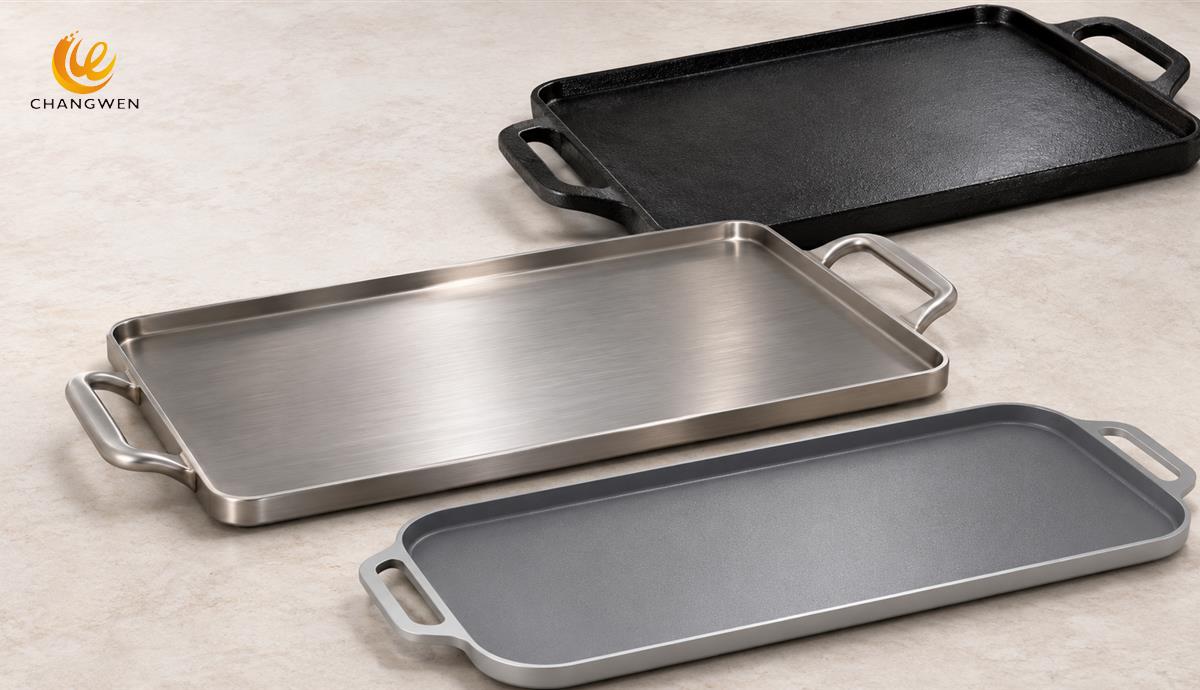
Cast iron is attractive when a cook values steady browning and can comfortably lift the plate. A heavy cast iron griddle stores considerable heat once preheated, which helps when several chilled portions land together. The same mass takes time to warm and cool. For someone preparing a single tortilla before work, that wait and weight may matter more than heat retention. Before ordering a large model, try moving a cold sample from the cabinet to the stove using the same grip the customer will need.
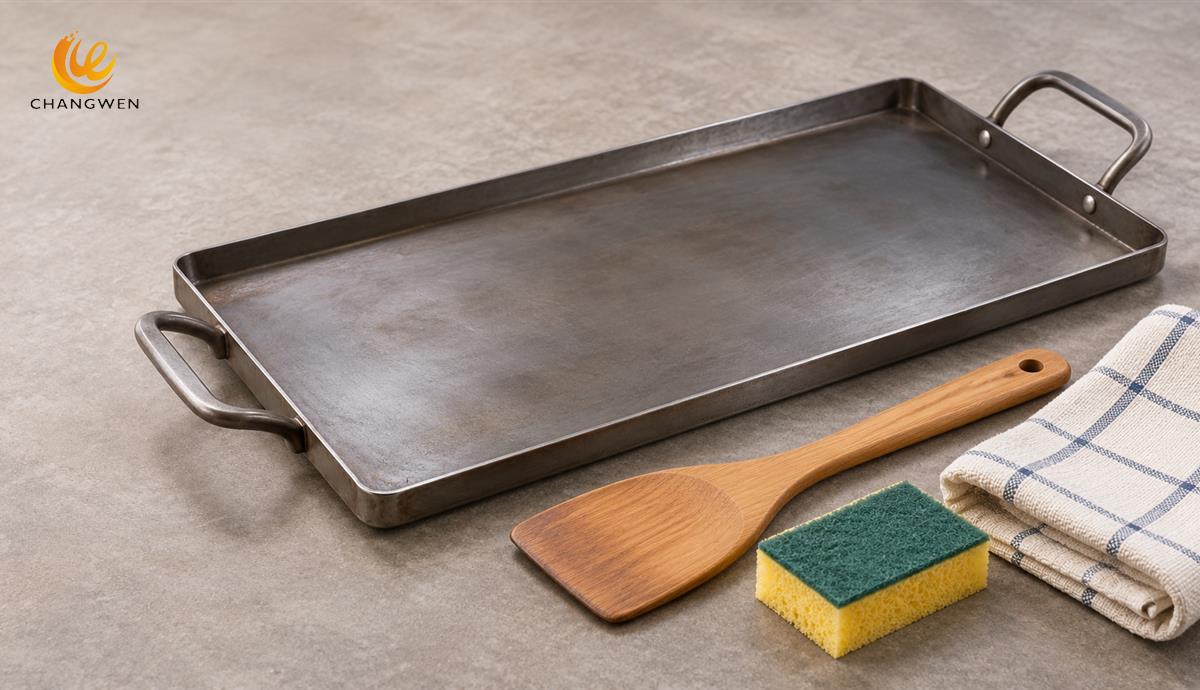
Bare carbon steel offers a smooth metal working surface that can develop seasoning with suitable use and care. Thickness varies considerably, so compare sample weights and plate dimensions before describing one steel griddle as lighter than another. A kitchen that regularly dries and maintains bare cookware may welcome this construction. A shared holiday rental, where different guests wash and store the pan, may be better served by a surface with simpler care requirements. The intended cleaning routine is as relevant as the cooking performance.
Aluminum conducts heat readily, and many aluminum griddles are comparatively easy to maneuver. Separate the body from the cooking finish when reading a listing. An aluminum body can carry an applied coating, while an induction-compatible version may incorporate a separate magnetic base. These details affect different decisions: body construction influences heat distribution, the cooking finish determines permitted utensils, and the underside determines whether a particular cooktop can recognize the pan. Verify each feature for the model being purchased.
Uncoated stainless steel is worth considering when a kitchen wants a durable working surface and prefers to avoid maintaining seasoning. Food release still depends on the food, fat and heat management. A thin sheet of stainless steel and a griddle with a conductive core can behave differently over the same burner. Ask the supplier to identify the construction across the working area. Changwen’s stainless steel griddle sourcing guide provides additional context for wholesale buyers comparing suppliers.
A coated griddle can make delicate eggs or thin pancakes easier to release with a suitable turner. The buyer also takes on a set of care limits. Obtain the permitted utensil types, heating instructions and washing method for the exact finish. A busy kitchen that habitually uses a steel scraper should check whether its team can change that practice before specifying a coated surface. A dark product photograph can show shape and color, but it cannot establish the coating chemistry, oven rating or permitted cleaning tools.
How large should the griddle be?
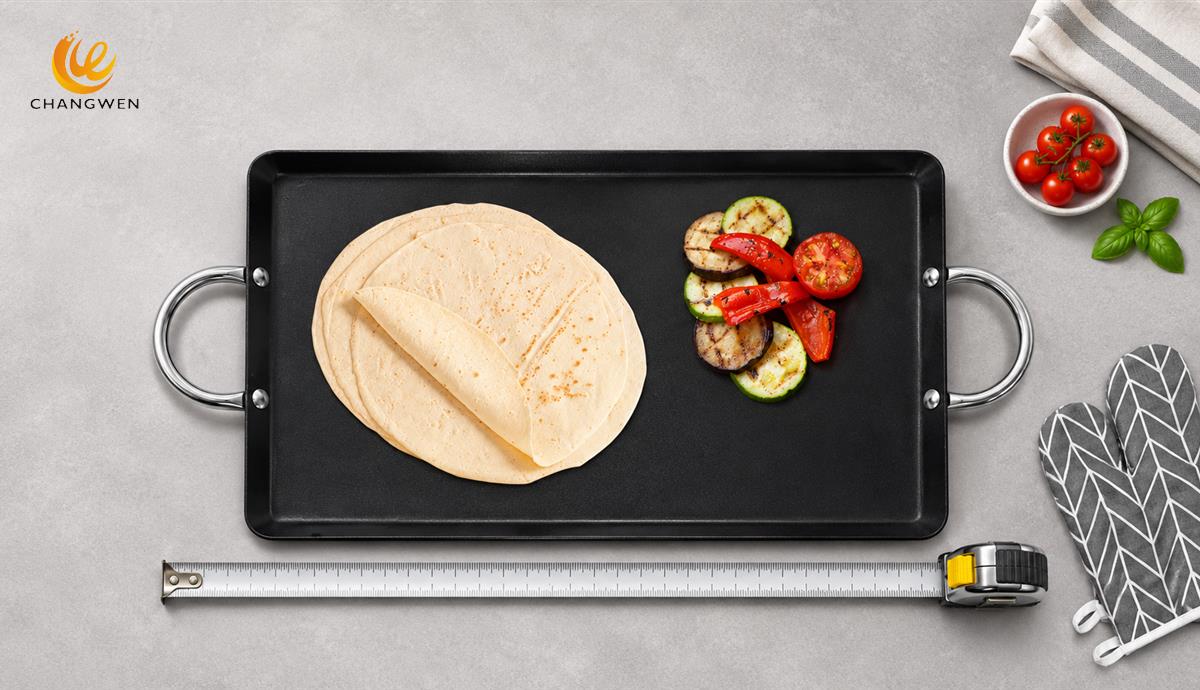
Use three measurements on every comparison sheet. The outside footprint includes handles and controls. The flat cooking surface excludes sloped sides, grease channels and rivets that obstruct food. The supported base describes the part that rests properly on the intended appliance. Each measurement answers a different question. A long loop handle can improve grip without adding room for another tortilla, while a wide lip can make a griddle look generous even when its usable cooking width is quite modest.
Calculate capacity with portions rather than total square inches alone. Suppose a cook wants four 5-inch pancakes in two rows. Two pancakes side by side with a 1-inch gap occupy 11 inches before any edge allowance. Leaving half an inch at each outside edge brings the layout to 12 by 12 inches. That is a planning example, not a universal spacing rule. A narrower plate with the same total area may require a single row, and the turner may need extra space in front.
Measure a cold cooktop at the points where the base will actually rest. On a gas range, look for full, stable support on the grate and access to adjacent controls. On a smooth electric or induction surface, follow the appliance maker’s limits on pan shape, contact and size. For a bridge zone, check the manual’s description of compatible cookware. A magnet can provide a clue about a base, but it cannot confirm that an induction unit will recognize the pan or heat its entire footprint.
Storage dimensions deserve their own line on a griddle specification. A plate might fit across the stove and still be too long to lie flat in a kitchen drawer. Check the sink opening, drying rack and shelf depth with the handles included. For a heavy plate, consider the route between those points. A shorter griddle that can be washed flat and stored at waist height may see more use than a larger model that has to be balanced on one end after every meal.
When do smooth, ridged and reversible surfaces make sense?
A smooth plate provides continuous contact for eggs, batters, tortillas and toasted bread. It also gives a broad turner a clear path under the food. A ridged grill pan concentrates contact on raised lines and leaves channels between them. Choose ridges when marks and separation from some rendered fat suit the menu. For a breakfast sandwich with a uniformly toasted face, a smooth surface is easier to judge because nearly the entire cut side of the bread can contact the metal.
A reversible griddle offers a smooth face and a ridged face in one piece. Evaluate the underside in both orientations, particularly if the appliance requires a flat contact surface. Look at where food residues or grease from the first face might collect during cleaning. A reversible design can be a good space-saving purchase when both faces are approved for the intended heat source and both will see regular use. For a café that cooks pancakes all morning, the unused ridged face adds little operational value.
Edge height should match the food and the utensil. A low front lip makes it easier to lift a folded flatbread or slide a long spatula beneath a sandwich. Higher sides can help contain chopped vegetables during turning. A grease channel takes up some cooking area but can be valuable when several fatty portions release liquid at once. Inspect the route from the cooking surface to the collection point. A shallow handled plate intended for flatbreads should not be assumed to collect a large volume of grease.
How does the menu change the best griddle choice?
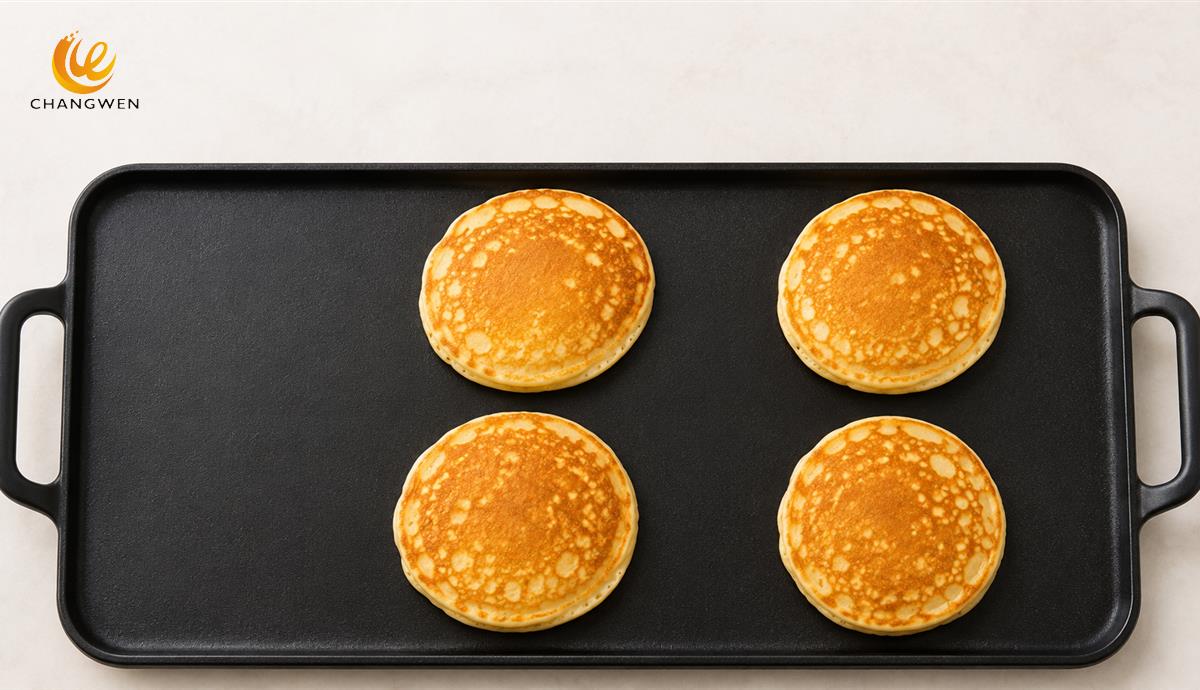
For pancakes, a broad zone of similar heat is more useful than a single intensely hot spot. During a sample trial, put equal portions of the same batter in a repeatable pattern and compare the undersides at the same point in cooking. Note whether a corner portion consistently lags behind the center. A mild variation may be easy for a home cook to manage by changing placement; a breakfast counter promising identical stacks may need a smaller active layout or a better-matched plate and heat source.
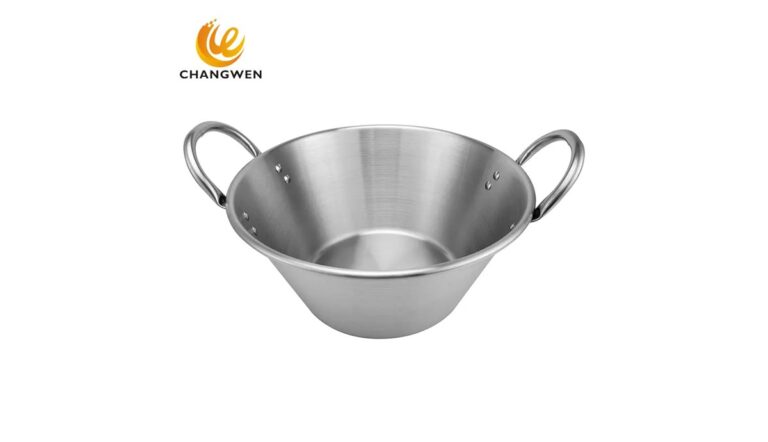
For tortillas and filled flatbreads, measure the diameter of the finished food and the width of the turning utensil. Two tortillas might fit on a cold surface edge to edge but overlap once one is lifted or folded. A smooth, shallow griddle with accessible ends gives the cook room to maneuver. The loop-handled rectangular format shown in this guide illustrates that geometry. Confirm the actual product’s heat-source compatibility with the supplier before specifying it for a particular stovetop or appliance.
For toasted sandwiches, count bread contact points as well as complete servings. A cook preparing three open-faced sandwiches may need room for six slices at the start but only three assembled sandwiches at the finish. Lay out bread from the kitchen’s usual loaf on a cold plate and check where a turner can enter. One extra inch of usable width matters if it adds another row. Beyond that threshold, additional width may merely occupy the burner needed for soup or a side dish.
For burgers or vegetables served in quick succession, recovery between loads matters. Compare two griddles using the same portions, heat source and starting conditions, then record what happens on the second batch. A plate that browns the first load beautifully may struggle if the second goes on immediately. Evaluate browning separately from doneness; surface color alone does not establish that food is cooked through. If grease accumulates during the trial, include the time required to manage it when comparing potential throughput.
How can a buyer compare two samples fairly?
Start with the question behind the purchase order. If the complaint is unevenly browned flatbreads, compare the working area with the same dough and appliance. If the complaint is awkward handling, have the intended user carry and wash each cold sample with a representative load. Combining those questions into one overall score makes a result difficult to act on. Keep separate notes for cooking consistency, ease of turning, handling, cleaning and storage so the buying team can see which trade-off it is accepting.
For a repeatable surface comparison, record the plate orientation, heat setting, preheating procedure and placement pattern. Use the manufacturer’s directions for each finish rather than forcing two different products through an unsuitable heating procedure. Photograph the food in its original positions under similar light. Rotate the plate on a subsequent run only when that orientation is also approved. If an uneven result moves with the plate, it suggests a different follow-up question than a pale patch that stays over the same burner position.
For a handle check, inspect how far the grips stand clear of the hot working area and whether normal oven mitts can enter a loop. Try lifting the cool sample with the weight distributed first in the center and then slightly toward one end. A shallow, two-handled griddle can feel balanced empty but awkward to carry when food shifts. Record the complete sample weight and the grip dimensions. A buyer can then describe handling with a measurement instead of relying on the word “ergonomic.”
For a cleaning comparison, use residue from the intended menu. A dry tortilla leaves a different task from sweet glaze or cheese that has escaped from a sandwich. Follow the proposed care instructions and inspect rivets, corners and grease channels after washing. Record active cleaning time as well as any drying or seasoning step. A dishwasher claim needs confirmation for the complete product, including its finish and attachments. A removable grease cup being dishwasher safe does not establish that the whole assembly is suitable.
Will a larger griddle actually reduce service time?
Estimate production from portions per successful batch and minutes per complete cycle. For example, a café needs 24 pancakes during a short breakfast rush. A plate that reliably produces four at once needs six loads. If a smaller plate produces three evenly browned pancakes per load, it needs eight. The larger plate earns its space only if those six loads, including heat recovery and turning, fit the service window. Theoretical capacity based on the outside dimensions can disguise portions that must be moved or cooked twice.
Count the cook’s available time as well as the plate’s capacity. A person preparing fillings and assembling sandwiches may be able to manage four portions comfortably but struggle to turn eight within the same browning window. Two smaller batches may deliver more consistent sandwiches than one crowded load. During the trial, let the person who will run the station use the proposed utensils and normal workflow. Record how many portions are ready to serve together, rather than counting everything that physically fits at the start.
A household has a different definition of capacity from a café. For a family that wants to eat breakfast together, a four-portion griddle can be worthwhile even if a smaller one cooks a single portion faster. For a couple with limited storage, speed of setup and cleanup may carry more weight. Decide whether the buying goal is the shortest time to the first serving or the shortest time to the last one. Those two measures can favor different plate sizes on the same stove.
What should a retailer put in a griddle listing?
Lead with the cooking format, verified heat source and usable surface dimensions. Follow with overall dimensions, weight, surface construction and care instructions. A customer deciding whether two tortillas fit needs a different number from a customer checking drawer clearance. Show both with a simple dimension drawing, including units. Where a model uses both imperial and metric figures, derive both from the same approved drawing and state which measurements are approximate. Rounding each edition independently can make a borderline fit look more certain than it is.
Choose photographs that answer distinct questions. A top view can show the flat area and grease channel, a side view can show lip height, and an underside view can identify the shape of the contact base. A photograph of food should use realistic portions and leave room for the turning utensil. If an accessory appears beside the product, identify whether it is included. Customers comparing two offers need to know whether the quoted price covers the griddle alone or also covers mitts, a press or a removable tray.
What belongs in a wholesale or private-label specification?
Specify the target appliance and menu before asking factories for prices. Include the working dimensions, overall footprint, plate construction, finish, handle attachment, packaging quantity and destination market. Ask the supplier to identify which details come from an existing model and which require a new tool or production trial. A lower quote for a thinner plate with different handles can be a legitimate option, but it answers a different brief. Compare quotations against the same drawing, approved materials and order quantity.
For a retail shipment, examine two packed samples together. A separator that protects the middle of a cooking face may leave the next unit’s handle or rivet pressing against its edge. Take a photograph of the stacking order, note the carton dimensions and agree how the finish will be protected in transit. A small increase in packing volume can be justified if it prevents repeated surface damage; a larger carton without a restraint can allow more movement. Assess protection and shipment volume together.
For repeat orders, keep a dated reference sample, its drawings, the care card and the exact food layout used during approval. Ask how changes in surface finish, dimensions or handle suppliers will be communicated. A small change to the rim can alter where a turner enters even when the overall length stays constant. Buyers building a new range can review Changwen’s OEM cookware project overview for context on turning a retail brief into a production specification.
Discuss wholesale griddles and OEM options with Changwen
Changwen supplies wholesale cookware and supports private-label and OEM/ODM projects for brands and distributors. To request a griddle quotation, send your target market, preferred cooking surface, intended appliance, order quantity and packaging or logo requirements. Include the maximum handle-to-handle length and a sample menu so the team can distinguish a fit requirement from a cooking-area requirement. Ask which existing model meets the brief and which changes need a prototype. Contact Changwen to discuss wholesale pricing, private labeling and a griddle sample for evaluation.