Cookware manufacturing partner since 2002 info@cwchangwen.com · +86 180 2296 3948

What Does Piece Count Really Mean in a Cookware Set?

Estimated reading time: 13 minutes.
A cookware set piece count means the total number of separate items included in the package, not the number of pots and pans. A lid normally counts as one piece, and a steamer insert, utensil, storage lid, removable handle, or protector may also count as one piece when it is listed separately. A 10-piece cookware set might therefore contain five cooking vessels and five lids, while another 10-piece set might contain four vessels, three lids, two utensils, and one steamer insert.
The most useful way to compare cookware sets is to look beyond the package number and calculate three separate values: total packaged pieces, active cooking vessels, and cooking functions covered. Total packaged pieces describe what is in the box, active vessels describe how many items can hold food on a cooktop or in an oven, and function coverage describes how many real cooking tasks the set can perform without unnecessary duplication.
What is counted as one piece in a cookware set?
One piece in a cookware set is normally one physically separate item listed in the set contents. A saucepan is one piece, its removable lid is another piece, and a steamer insert placed inside the saucepan can be a third piece. The count is an inventory number, so buyers should not interpret a 12-piece label as a promise of 12 cooking vessels.
Lids count separately because each lid is manufactured, handled, inspected, packed, and used as an independent component. A lid also changes how a vessel performs by supporting simmering, steaming, braising, and heat retention. Counting a lid is therefore reasonable, but the package should make the vessel-to-lid relationship easy to understand.
Accessories can also increase the number without increasing cooking capacity. A spoon, spatula, trivet, pan protector, storage cover, or removable handle may be useful, but none of those accessories replaces a saucepan, frying pan, or stockpot. A clear product page should identify every accessory so the customer can distinguish practical extras from core cookware.
| Counting method | What it measures | What it does not prove | Best use |
|---|---|---|---|
| Total packaged pieces | Every separately listed item in the box | Number of pots and pans | Inventory and package comparison |
| Active cooking vessels | Items that directly hold food during cooking | Range of cooking techniques | Kitchen capacity comparison |
| Function coverage | Distinct cooking jobs the set can perform well | Material quality or durability | Practical value comparison |
Why can two cookware sets with the same piece count be completely different?
Two cookware sets with the same piece count can differ because manufacturers and retailers can combine vessels, lids, inserts, tools, and removable parts in many ways. One 10-piece set may center on five useful vessels with matching lids, while another 10-piece set may use four vessels and several low-cost accessories. The printed number is identical, but the cooking capacity and price allocation are not.
Vessel sizes create a second difference that the count cannot show. A set with two saucepans that differ only slightly in capacity may create more overlap than a set with one saucepan, one saute pan, one frying pan, and one stockpot. A buyer should compare the diameter, usable capacity, depth, and cooking role of each vessel rather than treating every pot as equally useful.
Lid sharing creates a third difference. A well-planned set may use one lid across two compatible vessels, reducing storage needs while preserving function. Another set may provide a dedicated lid for every vessel, increasing the package count but also simplifying simultaneous cooking. Neither arrangement is automatically better; the right choice depends on whether compact storage or parallel use matters more to the target customer.
What might a 10-piece cookware set actually include?
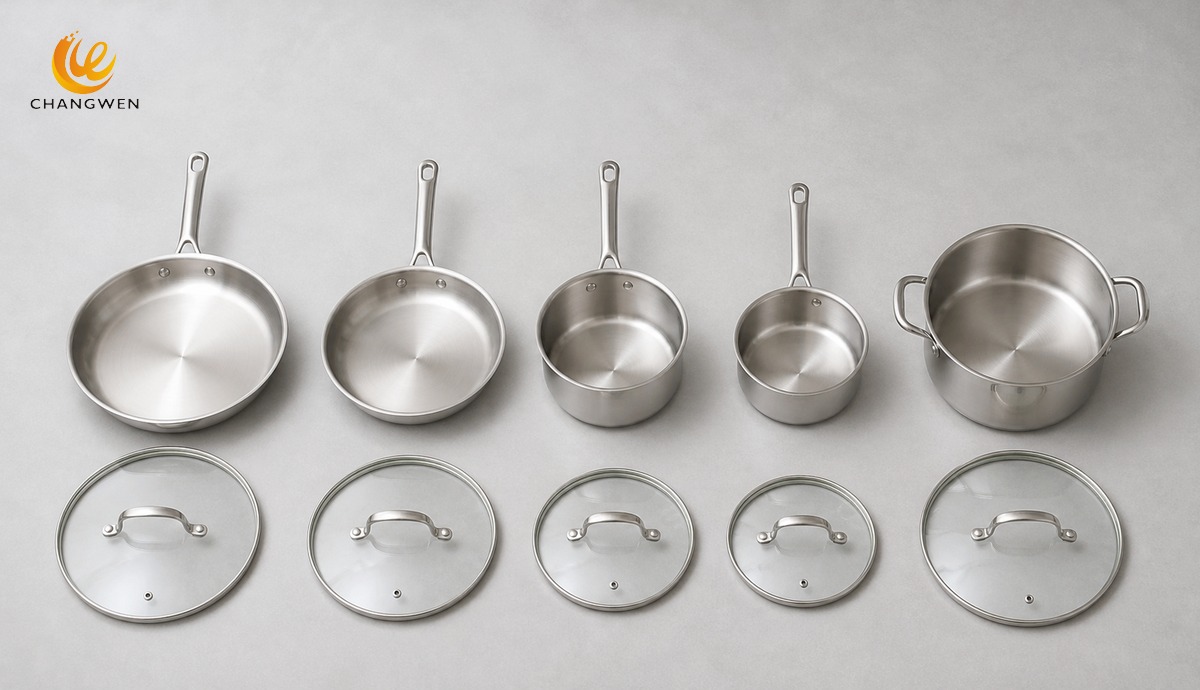
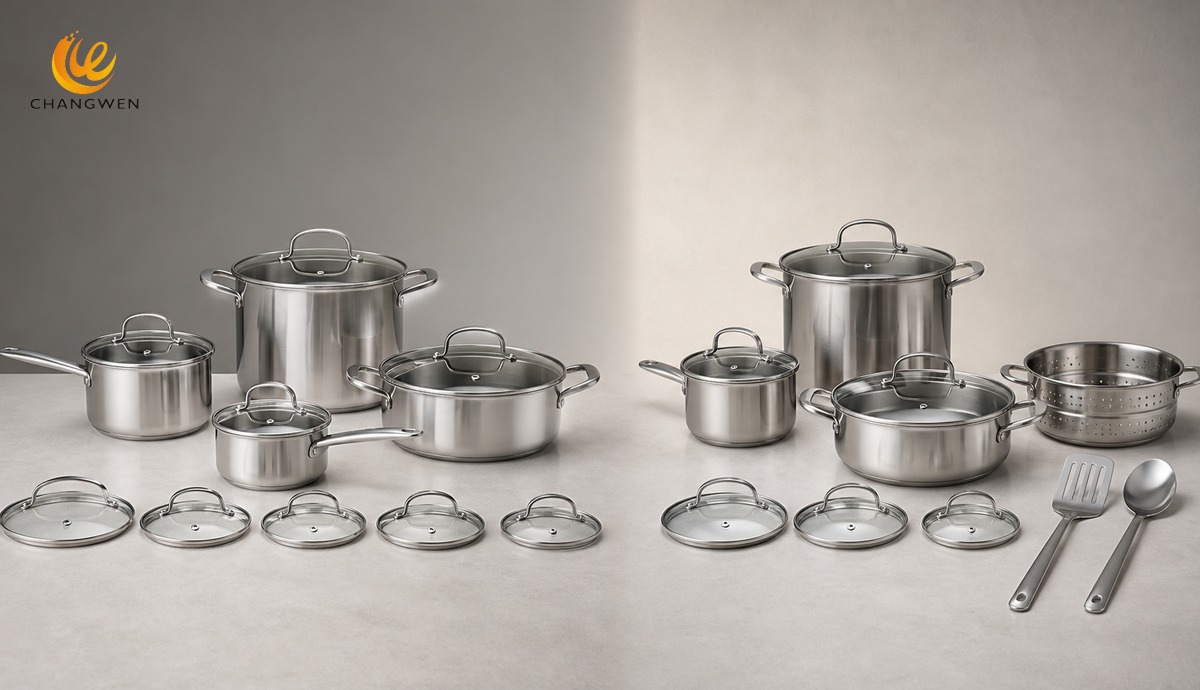
An illustrative 10-piece cookware set might include two frying pans, two saucepans, one stockpot, and five matching lids. That configuration contains five active cooking vessels and five lids. The set offers frying, sauce preparation, grain cooking, boiling, and batch cooking without relying on utensils to increase the number.
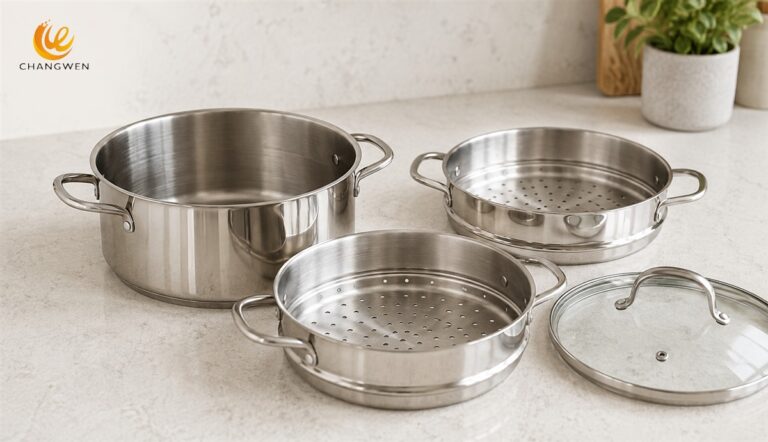
A different 10-piece cookware set might include one frying pan, two saucepans, one stockpot, three lids, one steamer insert, one spatula, and one spoon. That configuration contains four active vessels, three lids, and three accessories. The second set may still be valuable if steaming and included tools matter to its audience, but it should not be compared with the first set only by the number 10.
A retailer should display the complete contents beside the main product image because customers cannot reliably infer the composition from the package name. A simple line such as "4 cooking vessels + 3 lids + 3 accessories" communicates more practical information than "10-piece cookware set" alone. Clear composition reduces expectation gaps before purchase.
Does a larger piece count mean a better cookware set?
A larger piece count does not automatically mean a better cookware set because quantity does not establish usefulness, construction quality, size fit, or durability. A compact set with four frequently used vessels can deliver more daily value than a larger set containing repeated sizes or accessories the customer already owns.
A higher count becomes valuable when each additional piece adds a distinct job. A second frying pan can support different portion sizes, a saute pan can add covered shallow cooking, a stockpot can handle pasta and batch meals, and a steamer insert can add a cooking method without requiring another full vessel. The additional piece should expand capability rather than merely make the package number larger.
A lower count becomes valuable when space, mobility, and simplicity are priorities. Apartment residents, first-time households, temporary accommodation, and compact kitchens may prefer fewer pieces that nest efficiently and cover essential tasks. A smaller set can also let the customer add specialty cookware later instead of paying for every possible item at the beginning.
How should buyers calculate the active-vessel count?
The active-vessel count should include each pot, pan, roaster, kettle, or other container that directly holds food or liquid during cooking. Frying pans, saucepans, casseroles, saute pans, stockpots, woks, and roasting pans qualify as active vessels. Lids, utensils, inserts, protectors, and handles should be reported separately.
A steamer insert deserves a separate functional label because it cooks food but normally depends on another vessel for heat and water. The most transparent description is not to force the insert into one category; it is to state "five active vessels, one dependent cooking insert, and four lids." That language preserves the total count while explaining how the system works.
A removable handle also deserves separate treatment because it may control several pans without holding food itself. A detachable set with three pans, two lids, one storage lid, and one handle contains seven packaged pieces but only three active vessels. The shared handle may create genuine storage value, yet the product description should explain that only one handled pan may be moved at a time unless another handle is supplied.
What does function coverage reveal that piece count hides?
Function coverage reveals whether a cookware set can perform the customer's recurring tasks. A useful assessment lists the jobs first, such as frying breakfast, making sauces, boiling grains, cooking pasta, preparing soup, steaming vegetables, and braising. The set is then evaluated against those jobs instead of against an abstract package number.
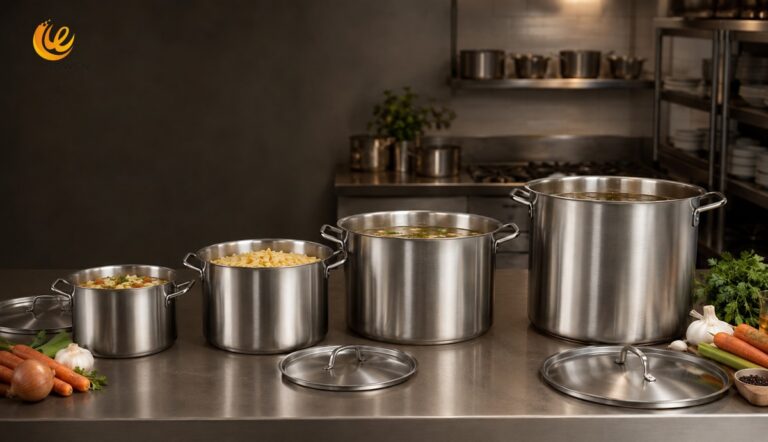
Size diversity improves function coverage when each size supports a different food volume. A small saucepan can handle sauces or single portions, a medium saucepan can cook grains and vegetables, and a stockpot can handle pasta or large batches. Three vessels with clearly separated capacities often provide better coverage than three vessels clustered around the same size.
Shape diversity also improves function coverage because diameter, wall height, and base area affect use. A frying pan supports browning and evaporation, a saucepan supports contained liquid cooking, and a saute pan combines a broad cooking surface with higher straight sides. A set containing distinct shapes can cover more techniques than a set containing several visually similar pots.
How should households choose the right piece count?
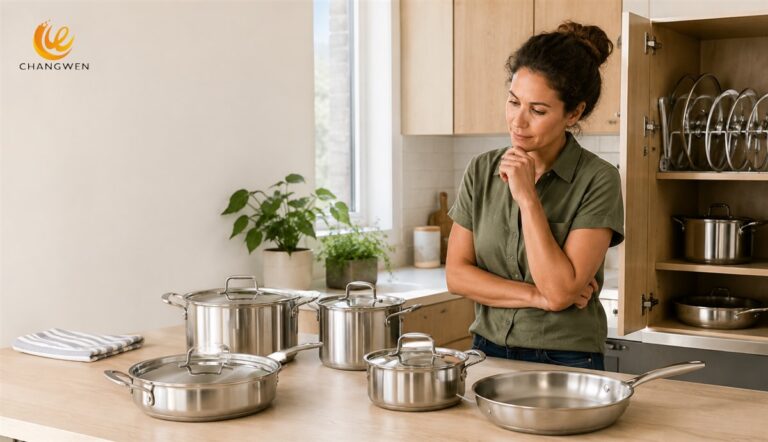
A household should choose a cookware set by meal pattern, serving count, simultaneous cooking needs, and storage space before considering the advertised piece count. A person who prepares one-pan meals has a different requirement from a family that cooks a main dish, vegetables, rice, and sauce at the same time.
A small starter set is usually easier to justify when the household needs a frying pan, one or two saucepans, and a stockpot but has limited cabinets. A broader set becomes more useful when several burners are used at once or when different vessel shapes support a varied menu. The decision should follow actual cooking frequency rather than the idea that more pieces always represent better value.
Storage should be evaluated with lids and accessories included because those components create real cabinet demand. Stackable vessels may occupy little vertical space, while multiple glass lids can require a rack or divider. A set that fits on a product photograph may become inconvenient when every component must be stored separately.
How should retailers and wholesalers compare cookware set value?
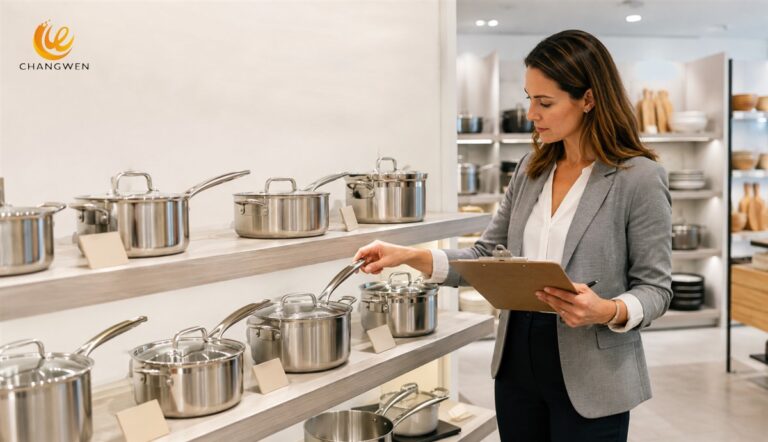
Retailers and wholesalers should compare cookware set value with a composition matrix that records vessel count, vessel sizes, lid count, accessory count, function coverage, storage footprint, construction, and target price. This method makes quotations and product concepts comparable even when suppliers use different package counts.
Retail buyers should also identify the hero vessel that gives the set its strongest reason to exist. A family set may be defined by a useful stockpot, a compact set may be defined by nesting, and a premium set may be defined by a versatile saute pan. If the set lacks a clear hero vessel, the assortment may look complete without solving a memorable customer need.
Wholesale buyers should check whether the set supports the intended retail channel. A supermarket may need a simple composition that can be understood quickly, a specialty store can support more detailed education, and an online listing needs exact dimensions and a clear contents image. The same physical set may require different merchandising information across channels.
Buyers planning a larger order can connect piece-count decisions with the site's guide to purchasing cookware in bulk. The bulk-purchase decision should confirm construction, hardware, packaging, testing, and commercial terms after the set composition has been selected.
How should a private-label brand specify a cookware set?
A private-label cookware specification should list every item by product type, diameter, usable capacity, lid relationship, handle type, material or construction, finish, and quantity. The specification should then state the total packaged count and the active-vessel count separately. This format prevents a design discussion from being reduced to an ambiguous request for a "10-piece set."
A brand should define the target user and cooking jobs before selecting components. A starter collection, family collection, compact urban collection, and commercial collection require different size distributions. The private-label cookware guide explains the broader launch process, while the set specification should remain focused on what each component contributes.
A brand should also clarify whether lids are dedicated, interchangeable, or shared. Dedicated lids support simultaneous use, shared lids can reduce storage and material, and universal lids can simplify replacement. The decision affects package count, carton layout, perceived completeness, and the customer explanation.
OEM and ODM responsibilities should be agreed before sampling because the party controlling the design must approve the final composition. The site's OEM vs ODM cookware comparison explains how design authority, tooling, changes, and supplier portability differ between the two development routes.
How can packaging explain piece count clearly?
Cookware packaging should show a complete contents image, a written component list, and a simple composition summary. A transparent summary might read "5 vessels + 5 lids = 10 pieces" or "4 vessels + 3 lids + 1 insert + 2 tools = 10 pieces." The summary lets customers compare sets without searching through small print.
Package images should separate nested vessels enough for each component to be visible. A tightly stacked image can make a set look compact, but it can also hide a smaller pan or create uncertainty about how many lids are included. Numbered callouts can improve clarity when every number matches a named component in the contents list.
Retail packaging should not imply that every piece is a full cooking vessel when the count includes accessories. Honest composition can strengthen perceived value because the customer understands why each item exists. Brands developing boxes, sleeves, inserts, or e-commerce graphics can use these cookware packaging ideas for retailers as a broader planning reference.
How do material and construction affect the value of each piece?
Material and construction affect cookware set value independently from count. A set can contain many pieces made for basic use, or fewer pieces with a more demanding construction and finish. The customer should compare what each vessel is made to do, how often it will be used, and whether the construction is appropriate for that task.
A single material choice across every vessel can simplify appearance and product communication, but it may allocate cost evenly to items with different jobs. A frying pan used for browning and a stockpot used mainly for boiling do not always need identical performance priorities. A thoughtfully designed set balances a unified collection identity with the functional needs of each vessel.
Piece count should therefore be evaluated after the essential performance requirements are defined. Increasing the count cannot repair poor handle comfort, unstable bases, mismatched lids, inconvenient sizes, or unsuitable cooktop compatibility. The set must first work as cookware and then work as an attractive package.
What is the fastest way to compare two cookware sets?
The fastest reliable comparison uses five questions: How many active vessels are included? Which sizes and shapes are genuinely different? Which lids or accessories depend on another vessel? Which recurring cooking tasks are covered? Which pieces are likely to remain unused? Those questions convert the package count into a practical kitchen decision.
| Question | Stronger answer | Warning sign |
|---|---|---|
| How many active vessels? | Clearly stated beside the total count | Only the package number is prominent |
| Are sizes meaningfully different? | Each capacity supports a distinct task | Several vessels have overlapping roles |
| Do accessories add function? | Each accessory solves a defined need | Low-use extras inflate the count |
| Will the set fit the kitchen? | Dimensions and storage method are shown | Storage is ignored |
| Is the composition transparent? | Images and lists identify every item | Customers must infer what is included |
What should an OEM sample review confirm?
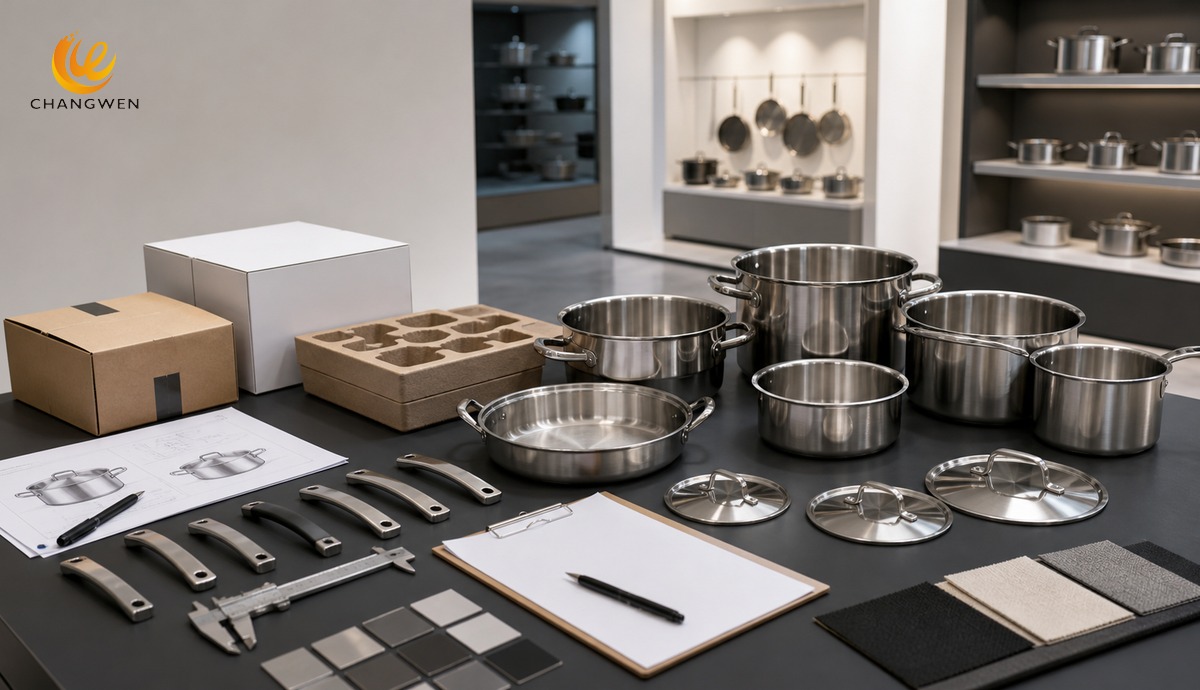
An OEM sample review should confirm that every listed item is present, correctly sized, functionally compatible, and consistently finished. The review should check lid fit, nesting order, handle clearance, carton arrangement, total weight, and whether the unpacked composition matches the approved visual.
The sample review should also test the set as a system. Stacked cookware should separate without damage, shared lids should fit every intended vessel, removable handles should connect to every specified body, and accessories should fit the claimed use. A collection can pass individual component checks while failing as an integrated set.
Final packaging should be approved with the final piece count because changing one lid, tool, or insert can alter the carton, protective materials, weight, labeling, and customer expectation. A controlled sample links the approved cookware composition to the approved package rather than treating them as separate projects.
How can Changwen help develop a clearer cookware set?
Changwen provides cookware wholesale, private-label, OEM, and ODM services for brands, wholesalers, retailers, and distributors. Changwen can help define a cookware set by target market, active-vessel count, vessel sizes, lid strategy, materials, colors, handles, branding, and packaging instead of beginning with a package number alone.
Buyers who need an existing collection can review the Changwen stainless steel cookware set range. Buyers developing an exclusive collection can explore custom stainless steel cookware options, including set composition, size, material, color, design, label, and packaging choices.
To request a wholesale quotation or discuss a private-label or OEM cookware set, prepare the destination market, target customer, preferred number of active vessels, required sizes, lid and handle preferences, branding needs, packaging format, and estimated order quantity. Then contact Changwen so the team can recommend a practical configuration and prepare the next project step.
Frequently asked questions
Do lids count as pieces in a cookware set?
Yes. A separate lid commonly counts as one piece because it is an individual component in the package. Buyers should still report the lid count separately from the active cooking-vessel count so customers understand the composition.
Is a 10-piece cookware set ten pots and pans?
No. A 10-piece cookware set is usually a combination of pots, pans, lids, and sometimes inserts or accessories. The exact contents must be checked because the number alone does not reveal how many vessels can cook food.
What is the difference between piece count and vessel count?
Piece count includes every separately listed item in the box, while vessel count includes only the pots, pans, and other containers that directly hold food during cooking. Reporting both numbers makes two sets easier to compare.
Are utensils considered cookware set pieces?
Utensils can be counted as pieces when they are included and listed as separate package components. A utensil adds convenience but does not increase the number of active cooking vessels, so it should be identified as an accessory.
What piece count is best for a cookware set?
The best piece count is the smallest composition that covers the target user's recurring cooking tasks without unnecessary duplication. Household size, simultaneous cooking, storage, channel, and price position matter more than selecting the highest number.